
Earning money teaches value by creating a direct, physical link between effort and reward. When you work for something, you feel its cost in time and energy before you ever spend a cent. That experience builds delayed gratification, financial responsibility, and intentional decision-making. These are not soft skills. They are the foundation of every good money decision you will ever make. Understanding why earning money teaches value helps students, young professionals, and parents build habits that last a lifetime.
Why earning money teaches value through delayed gratification
Delayed gratification is the ability to wait for a better reward instead of grabbing the first one available. Waiting and saving before spending builds patience and links directly to better financial outcomes later in life. The lesson is simple but powerful: the money you earned cost you something real, so you think twice before spending it.
Visible saving methods make this lesson stick. A clear jar on a shelf, where a child can watch coins pile up, turns an abstract idea into something you can see and touch. Making saving visible makes money growth feel real and satisfying, which reinforces the value of waiting. The same principle applies to adults using a dedicated savings account with a progress tracker.

The "pay yourself first" habit works on the same logic. You set aside a portion of every paycheck before you spend anything else. That act of prioritizing future you over present you is delayed gratification in practice. Saving 10% regularly is one of the most cited benchmarks for building this habit early.
Key methods for building delayed gratification:
- Use a clear savings jar so progress is visible and motivating
- Set a specific savings goal before making a purchase
- Practice the "pay yourself first" rule with every paycheck or allowance
- Celebrate small milestones to reinforce the habit
Pro Tip: For parents teaching younger kids, label the jar with a picture of the item they are saving for. The visual target makes waiting feel purposeful, not punishing.
The neuroscience behind effort and money's perceived value
Your brain assigns more value to things you worked hard to get. Effort triggers dopamine reward learning, which makes earned rewards feel more satisfying than free ones. This is not a metaphor. It is a measurable brain process. When you earn money through real work, your brain encodes that money as more precious than a gift of the same amount.
This mechanism has a useful side effect: it makes you more careful about how you spend. You remember the hours behind the dollars. That memory slows down impulse purchases and pushes you toward more deliberate choices.
The same brain wiring, though, can backfire. The sunk-cost fallacy is the tendency to keep investing in something just because you already put effort into it. Sunk-cost bias can cause people to stay with bad financial decisions long after they should have walked away. A student who keeps paying for a course they hate, or an investor who holds a losing stock because they "put so much in already," is caught in this trap.
"Teaching value includes learning when to quit. Effort motivation and sunk-cost correction are two sides of the same coin." — Stanford Neuroscience Institute
Complete financial education addresses both sides. You teach kids and young adults to value their effort. You also teach them to recognize when past effort should not drive future choices. Sunk-cost correction scripts help learners ask: "Would I start this today if I had not already invested in it?" That one question can prevent years of poor financial persistence.
Key concepts to teach alongside effort and value:
- Earned rewards feel more valuable because of dopamine reward learning
- Sunk-cost bias is a real cognitive trap, not a character flaw
- The correction question is: "Would I choose this today from scratch?"
- Teaching both sides creates balanced, future-oriented financial thinkers
Pro Tip: When a child or teen is reluctant to quit a bad financial commitment, walk them through the correction question out loud. Make it a habit, not a one-time fix.
How family conversations build the value of financial education
Financial literacy starts very young through discussion, example, and hands-on experience. Children form basic money attitudes before they ever hold a job. Those attitudes are shaped by what they see and hear at home. A family that talks openly about money raises kids who are less afraid of it and more capable of managing it.
Brad Klontz, a financial psychologist, points out that avoiding money conversations leads to fear and confusion. Honest money talks and age-appropriate explanations build healthier long-term money relationships. When a parent says "we can't afford that" without explanation, the child learns anxiety. When the parent says "that's not our priority right now because we're saving for X," the child learns trade-offs.
Practical ways families can teach money value at home:
- Walk through the grocery budget. Let kids see the list, the prices, and the choices. Explain why you pick one brand over another.
- Show the household bills. Age-appropriate transparency about rent, utilities, and groceries makes money real, not abstract.
- Use "no" as a teaching moment. Explaining priorities when saying no builds financial literacy far better than a flat refusal.
- Give an allowance tied to chores. The effort-to-reward link is the core lesson. No effort, no pay.
- Let kids make small spending mistakes. Buying a cheap toy that breaks teaches more than any lecture about quality.
The goal is not to stress children out about money. The goal is to make money a normal topic, not a forbidden one. BYU research confirms that family economic stressors shape children's money habits and attitudes from a very early age. Parents who frame those stressors as learning opportunities give their kids a real advantage. For more on financial conversations at home, the approach matters as much as the content.
How environment shapes a young person's ability to value money
Not every child starts from the same place. Greater household adversity correlates with greater delay discounting, which means kids from harder backgrounds tend to prefer smaller, immediate rewards over larger, future ones. This is not a failure of character. It is a rational response to an unpredictable environment. If the future feels uncertain, grabbing what you can right now makes sense.
The practical implication for parents and educators is significant. Standard delayed gratification lessons may not land the same way for every child. A child who has experienced food insecurity or housing instability has a brain that has been trained to distrust the future. Telling that child to "just wait and save" without acknowledging their context misses the point entirely.
The solution is scaffolding. Scaffolding means breaking the waiting period into smaller, visible wins. Instead of asking a child to save for three months, you celebrate each week of progress. Immediate progress feedback helps children from adverse environments build trust in the saving process one small step at a time.
| Environment | Effect on money values | Effective teaching approach |
|---|---|---|
| Stable, low-stress home | Stronger ability to delay rewards | Standard saving goals and milestones |
| High-stress or unpredictable home | Higher preference for immediate rewards | Scaffolded progress with frequent small wins |
| History of economic adversity | Distrust of future rewards | Short-term goals with visible, tangible progress |
Higher delay discounting links to poorer academic performance and riskier behaviors in youth. Understanding this helps parents and teachers adapt their approach rather than blame the child. The good news is that delay discounting is malleable. The right environment and teaching methods can shift it over time.
Practical steps for teaching earning as effort, wait, and choice
The most durable money lesson follows a three-step sequence: work, wait, and then choose. Connecting earned money to an effort-wait-purchase sequence creates value lessons that stick long after childhood. Each step in the sequence does a specific job.
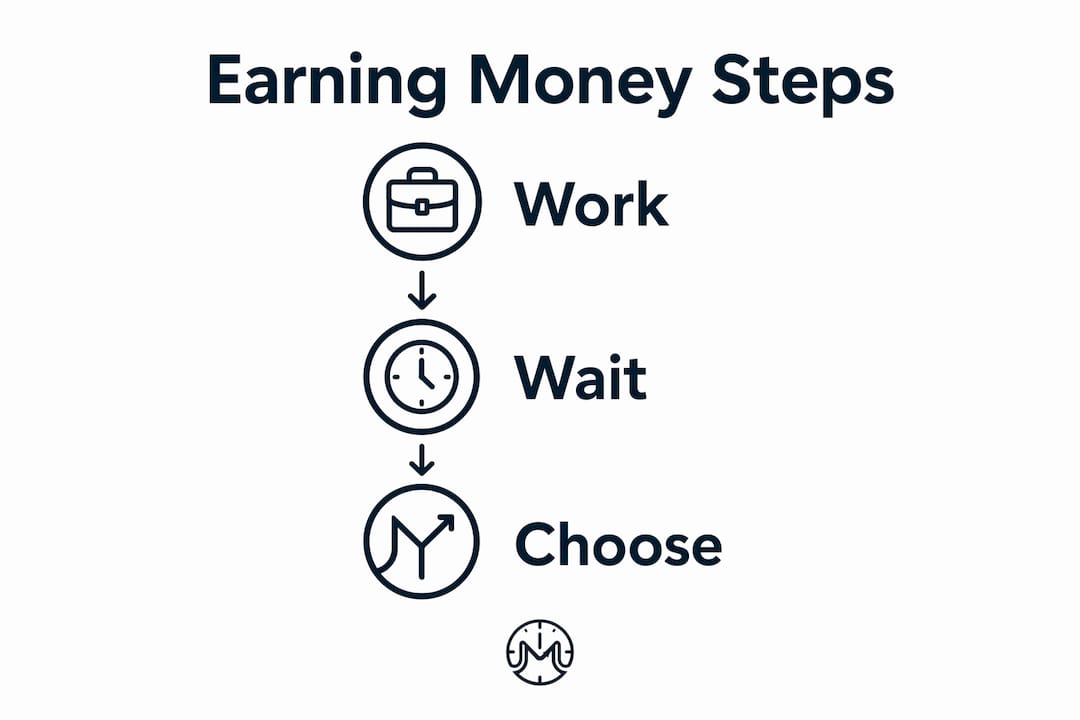
The work step makes the cost of money real. The wait step builds patience and filters out impulse decisions. The choice step teaches intentionality. When a teenager earns $50 mowing lawns, saves it for two weeks, and then decides whether to buy a game or add it to a larger goal, all three steps are active. That sequence is more powerful than any classroom lesson about budgeting.
Where this process fails is when one step gets skipped. Giving a child money without effort removes the cost. Spending immediately after earning removes the wait. Spending without reflection removes the choice. Simple statements like "money is earned, not given" mean nothing without the full sequence in practice.
Key teaching moments to build into the sequence:
- Assign tasks with clear pay rates so the effort-to-reward link is explicit
- Require a waiting period before any purchase, even a short one
- Ask "is this the best use of your money right now?" before every spend
- Celebrate the choice, not just the purchase, to reinforce intentional decision-making
Pro Tip: For teens, try age-appropriate money lessons that match their earning capacity. A 14-year-old babysitting and a 17-year-old with a part-time job need different frameworks, but the same three-step sequence applies to both.
Key Takeaways
Earning money teaches value because it links effort, patience, and intentional choice into a single, repeatable experience that builds lasting financial habits.
| Point | Details |
|---|---|
| Effort creates perceived value | Dopamine reward learning makes earned money feel more precious than money received as a gift. |
| Delayed gratification is teachable | Visible saving methods and short-term goals build patience in children and young adults. |
| Family conversations matter | Open, age-appropriate money talks reduce fear and build healthier long-term money habits. |
| Environment shapes money behavior | Adversity increases preference for immediate rewards; scaffolded progress helps close the gap. |
| The effort-wait-choice sequence works | Linking work, waiting, and deliberate spending creates durable value lessons that outlast any lecture. |
Minutementor makes financial education fast and real
Building money skills does not require a finance degree or hours of reading. Minutementor delivers targeted financial education in five-minute daily lessons, built around your specific goals, whether that is budgeting, saving, or understanding how money grows over time.

The platform's AI-powered coach tailors your learning path based on where you are right now, not where a generic curriculum assumes you should be. Parents can use Minutementor to sharpen their own financial knowledge before passing it on. Students and young professionals can build real skills fast, with progress tracking and gamified motivation that keeps momentum going. Check out Minutementor's full lesson library to see how five minutes a day adds up to real financial confidence. If you want to compare plans, the pricing page breaks down every option clearly.
FAQ
Why does earning money teach value better than receiving it?
Earning money requires effort, which triggers dopamine reward learning in the brain. That process makes earned money feel more valuable, which leads to more careful spending decisions.
At what age should kids start learning money value through earning?
Children can begin forming basic money habits and attitudes very early. Even simple chore-based allowances for young children create the effort-to-reward link that builds financial responsibility over time.
How does delayed gratification connect to financial success?
Delayed gratification builds the patience needed to save, invest, and avoid impulse spending. Research links stronger delay-of-gratification skills to better long-term financial outcomes.
What if a child grows up in a difficult financial environment?
Adversity increases the preference for immediate rewards, which makes standard saving lessons harder to apply. Scaffolded progress, with frequent small wins and visible milestones, helps children from harder backgrounds build trust in the saving process.
How can parents teach money value without creating anxiety?
Use "no" as a teaching moment by explaining family priorities rather than shutting down the conversation. Age-appropriate transparency about household budgets and spending choices builds literacy without fear.