
A money mindset is the set of ingrained beliefs, attitudes, and subconscious patterns about money that shape every financial decision you make. These beliefs form early in life and quietly drive how you earn, save, spend, invest, and manage debt as an adult. Your financial mindset is not just a personality quirk. Healthy money mindsets lead to better habits and reduced stress, while unhealthy beliefs cause avoidance, overspending, and financial anxiety. Understanding what is a money mindset is the first step toward changing the financial outcomes you experience every day.
What is a money mindset, and what are its main types?
A money mindset is a collection of subconscious financial operating rules formed primarily in childhood that govern adult financial behavior. Think of it as your brain's default programming for money. You did not choose these rules consciously, but they run in the background every time you check your bank balance, swipe your card, or avoid opening a bill.
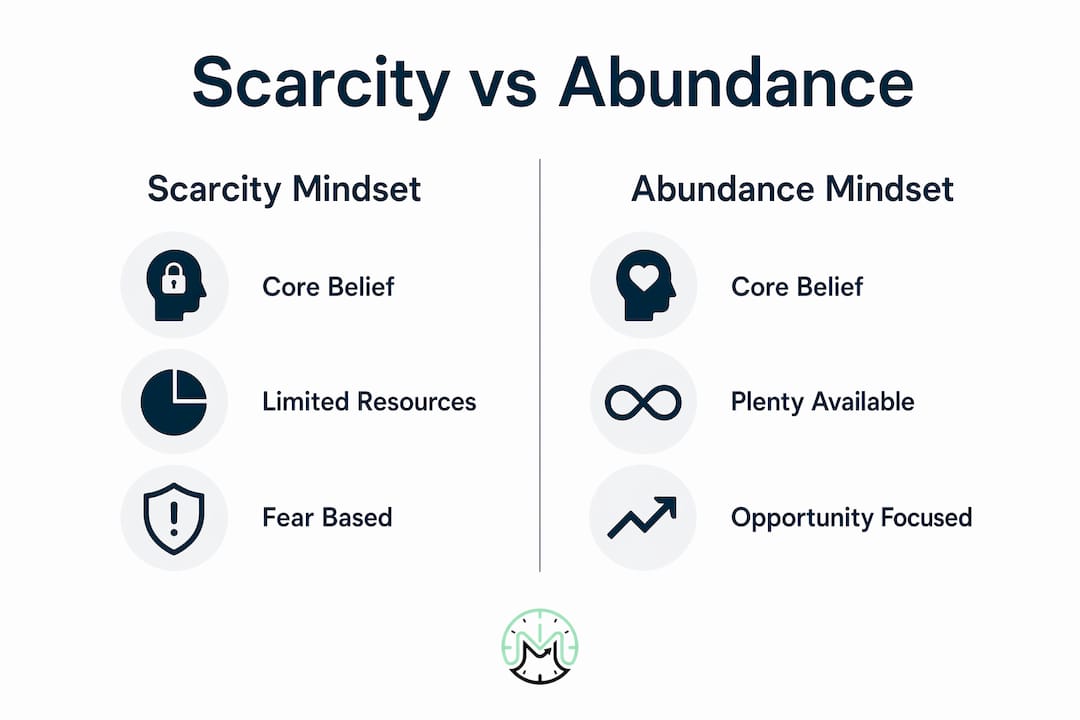
The two most recognized categories in personal finance psychology are the scarcity mindset and the abundance mindset.

| Mindset Type | Core Belief | Typical Behavior |
|---|---|---|
| Scarcity | "There is never enough money." | Hoarding, fear-based decisions, avoiding investment |
| Abundance | "Opportunities to grow wealth exist." | Calculated risk-taking, consistent saving, long-term planning |
| In-Debt | "I owe more than I own." | Minimum payments, avoidance, stress spending |
| Break-Even | "I just need to cover my bills." | No savings buffer, reactive budgeting |
Four common money mindsets — In-Debt, Break-Even, Comfortable, and Rich — each produce distinct financial behaviors and outlooks. This framework, developed by Karen Sutton-Johal, shows that mindset categories go beyond simple optimism or pessimism. They reflect deeply held beliefs about what is possible for you financially.
The scarcity mindset is fear-based and limitation-focused. People operating from scarcity often avoid checking their accounts, make impulsive purchases to feel temporary relief, and resist investing because loss feels more real than gain. The abundance mindset is growth-oriented and confident. People with this outlook treat setbacks as data, not disasters.
Here is what each mindset type tends to produce in practice:
- Scarcity: Skipping retirement contributions out of fear, panic-selling investments during market dips, chronic financial anxiety
- Abundance: Automating savings, viewing debt as a problem to solve rather than a life sentence, seeking financial education
- In-Debt: Ignoring account balances, borrowing to cover daily expenses, feeling shame around money conversations
- Break-Even: Living paycheck to paycheck by choice, not circumstance, with no emergency fund
Recognizing which category fits your current patterns is not about judgment. It is about getting honest so you can shift.
How childhood, culture, and emotions shape your financial mindset
Your financial mindset did not appear out of nowhere. It was built, piece by piece, from the messages you received about money growing up. Money decisions are driven mostly by emotions and subconscious patterns, not logic. That means changing your financial behavior requires more than reading a budgeting book.
The specific influences that build your money beliefs fall into three categories:
-
Childhood experiences. If your parents argued about money, you may associate finances with conflict and avoid the topic entirely. If money was treated as scarce and stressful, scarcity becomes your default lens. If you watched a parent invest confidently, you likely absorbed that confidence too. Family financial conversations at home shape subconscious beliefs more powerfully than any formal lesson.
-
Cultural norms. Some cultures treat debt as shameful. Others normalize it. Some communities view wealth as a sign of greed; others celebrate it as a goal. These norms become internal rules you follow without questioning them. A first-generation college student may feel guilt about earning more than their parents. A person raised in a wealth-focused environment may feel shame about financial struggle. Both are cultural scripts, not objective truths.
-
Emotional triggers. Stress, boredom, loneliness, and celebration all activate spending behaviors. Over 60% of employees report financial stress leading to impulsive spending for dopamine hits. That statistic shows that emotional spending is not a willpower failure. It is a predictable response to unaddressed financial anxiety.
Pro Tip: Write down the first three money messages you remember from childhood. Were they about scarcity, shame, abundance, or security? Those three messages are likely still running your financial decisions today.
These influences are not your fault, but they are your responsibility to address. The good news: your upbringing shapes financial attitudes but is not your destiny. Deliberate changes to mindset and behavior enable real financial improvement at any age.
How to develop a money mindset that actually works
Shifting your financial mindset is not about repeating affirmations until you feel rich. It requires pairing honest self-awareness with concrete behavioral changes. A positive money mindset balances honest acknowledgment of constraints with a genuine belief in your ability to improve through informed action. That combination is what separates lasting change from wishful thinking.
Here is a practical process for building a healthier financial mindset:
-
Audit your money beliefs. Spend 10 minutes journaling answers to: "What does money mean to me?" and "What do I believe about people who are wealthy?" Your answers reveal the scripts running your decisions.
-
Track every expense for 30 days. Tracking expenses reveals subconscious money scripts. Seeing the data changes your perception and makes invisible habits visible. Use a spreadsheet, a notes app, or a budgeting tool. The method matters less than the consistency.
-
Identify your emotional triggers. Note what you were feeling the last three times you made an unplanned purchase. Stress? Boredom? Celebration? Naming the trigger is the first step to interrupting the pattern.
-
Separate your identity from your net worth. Treating finances scientifically, by forming a hypothesis about why you overspend and testing new behaviors, produces faster and more sustainable results than shame-based motivation. You are not your bank balance.
-
Set one small, specific financial goal. Not "save more money." Instead: "Transfer $50 to savings every Friday." Concrete goals build the evidence your brain needs to shift from a scarcity to an abundance orientation.
-
Combine mindset work with real financial skills. Mindset alone does not pay off debt. Pair your belief shifts with practical knowledge in budgeting, investing, and debt management. Early money skills education shows that the earlier you build financial literacy, the stronger the foundation for healthy money beliefs.
Pro Tip: Treat your first month of expense tracking like a science experiment, not a report card. You are collecting data, not grading yourself. Curiosity beats guilt every time.
The importance of a money mindset shift lies in this: behavior follows belief. You can know every budgeting rule in existence and still self-sabotage if your subconscious believes you do not deserve financial stability. Mindset work closes that gap.
Money mindset examples and their real-world financial impact
Abstract concepts become clear through real scenarios. These money mindset examples show how belief systems play out in everyday financial life.
Scenario 1: The scarcity spender. Maria earns a solid income but lives paycheck to paycheck. She avoids her bank app because checking her balance triggers anxiety. When she does have extra money, she spends it immediately because she subconsciously believes it will disappear anyway. Her belief: "Money never lasts." Her result: no savings buffer, high stress, and a cycle that confirms her original belief.
Scenario 2: The abundance builder. James grew up with similar financial constraints as Maria. But a mentor taught him to view money as a tool, not a source of shame. He automates $100 into savings each month, even when it feels tight. He reads about building wealth through money habits and treats financial mistakes as lessons. His belief: "I can improve my situation." His result: a growing emergency fund and confidence that compounds over time.
Scenario 3: The break-even rationalizer. Devon makes enough to cover bills and a little more. He tells himself he will start saving "when things settle down." That moment never arrives because his mindset frames saving as optional rather than foundational. His belief: "I just need to get through this month." His result: years pass without financial progress despite a stable income.
The pattern across these examples is consistent. Mindset determines behavior. Behavior determines outcomes. Income level matters, but it does not override belief. A person earning $40,000 with an abundance mindset will often build more lasting wealth than someone earning $100,000 with a scarcity or break-even orientation.
The benefits of a money mindset shift are concrete: reduced financial anxiety, more consistent saving behavior, better debt management decisions, and a greater willingness to invest for the long term.
Key Takeaways
A money mindset is the single most powerful driver of financial behavior, and shifting it requires honest self-awareness paired with consistent, concrete financial actions.
| Point | Details |
|---|---|
| Money mindset definition | It is a set of subconscious beliefs about money formed in childhood that drive adult financial behavior. |
| Scarcity vs. abundance | Scarcity mindsets produce fear-based decisions; abundance mindsets produce growth-oriented financial habits. |
| Emotional roots | Over 60% of employees report financial stress leading to impulsive spending, showing mindset affects real behavior. |
| Practical change | Track expenses, journal money beliefs, and set specific goals to shift from limiting to positive financial patterns. |
| Mindset beats income | A positive financial mindset produces better outcomes than a high income paired with limiting beliefs. |
Build your financial mindset with Minutementor
Knowing what a money mindset is gets you started. Building one takes daily practice.
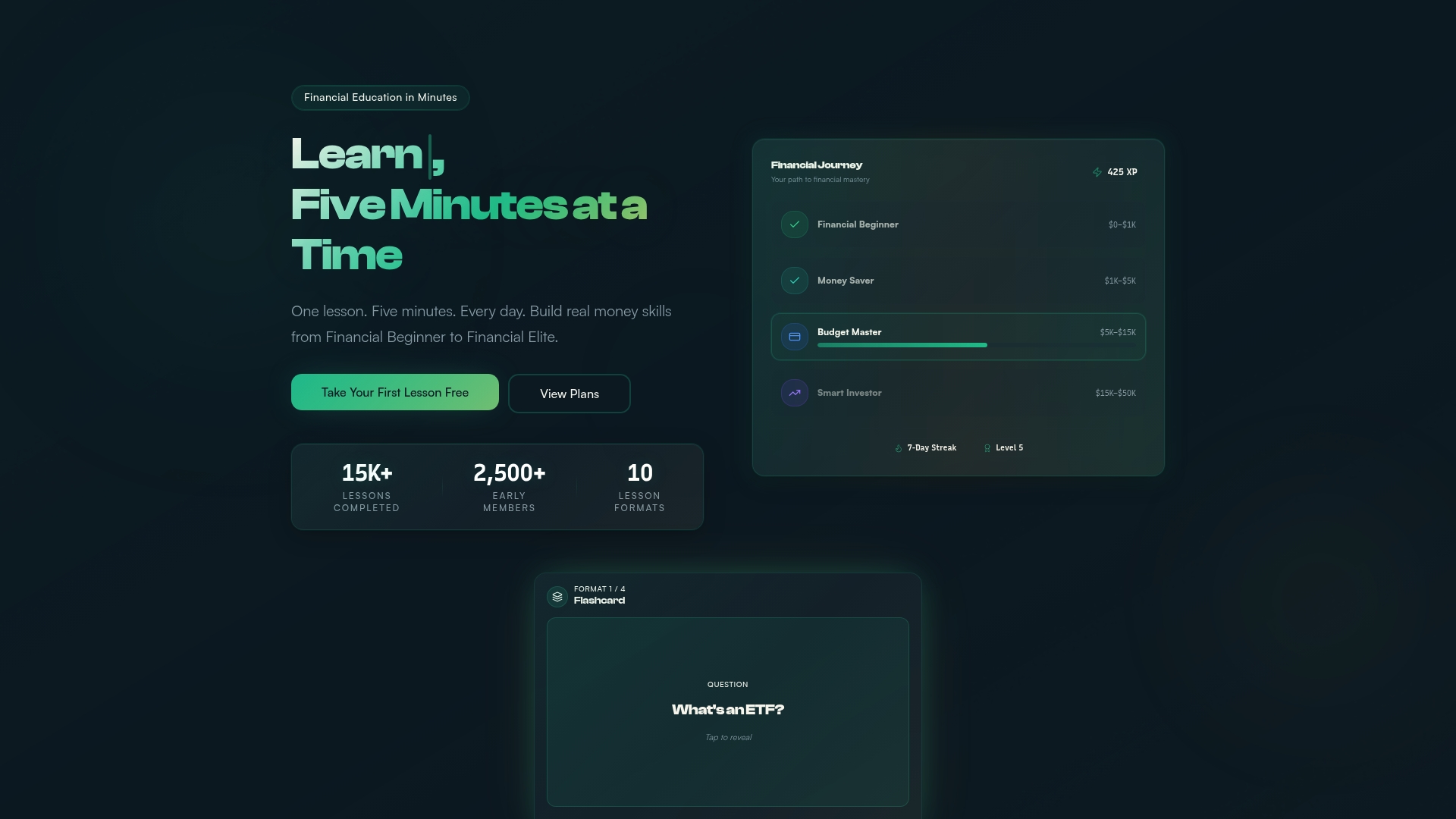
Minutementor delivers five-minute daily lessons designed to shift your financial beliefs and build real money skills at the same time. The platform's AI-powered personal finance coach creates a learning path based on your specific goals, whether that is budgeting, paying down debt, or starting to invest. Interactive lessons, progress tracking, and gamified motivation keep you moving forward without the overwhelm of traditional financial education. Students and young professionals have used Minutementor to save thousands and hit financial milestones they once thought were out of reach. Start building your money skills with Minutementor today and level up your financial confidence five minutes at a time.
FAQ
What is the money mindset definition in simple terms?
A money mindset is the collection of beliefs and attitudes about money that shape how you earn, spend, save, and invest. These beliefs form in childhood and operate subconsciously throughout adult life.
Can mindset affect finances in a measurable way?
Yes. Mindset directly influences financial behavior, and behavior determines outcomes. Over 60% of employees report that financial stress leads to impulsive spending, showing that belief-driven behavior has real financial consequences.
What is the difference between a scarcity and an abundance mindset?
A scarcity mindset is fear-based and assumes resources are limited, leading to avoidance and reactive decisions. An abundance mindset is growth-oriented and assumes improvement is possible, leading to consistent saving and investing.
How long does a money mindset shift take?
There is no fixed timeline, but research supports that pairing introspective awareness with concrete behavioral tracking produces faster, more sustainable results than willpower or affirmations alone.
How do I start improving my money mindset today?
Write down your earliest money memory and what it taught you about finances. Then track every expense for 30 days. Those two steps reveal the subconscious scripts driving your current financial behavior.