Smart money habits for high school students are the foundation of financial independence, and the earlier you build them, the more powerful they become. Personal finance education, the recognized field covering budgeting, saving, and investing, gives you tools that most adults wish they had learned at your age. Resources like the FDIC Money Smart for Young People curriculum, the Consumer Financial Protection Bureau (CFPB), and Citizens Bank all confirm that high school is the single best time to start. You do not need a big income to begin. You need the right habits.
1. Smart money habits every high school student should start now
The core of smart money habits in high school is intentional money management: knowing where your money comes from, where it goes, and what you want it to do. This is not about deprivation. It is about control.
Here are the habits that matter most right now:
- Pay yourself first. Before you spend a single dollar, move a set amount into savings. Even $5 from every paycheck or birthday gift adds up faster than you think.
- Track every dollar. Write down or log every purchase for one week. Most people are shocked by what they find. This single habit builds financial awareness for teens faster than any class.
- Create a real budget. Base it on what you actually spend, not what you think you spend. Guessing leads to budgets that fail in week two.
- Set short-term and long-term goals. A short-term goal might be saving $80 for concert tickets. A long-term goal might be saving $1,200 for a used car. Both need a plan.
- Pause before impulse buys. Wait 24 hours before buying anything over $20 that was not planned. Peer pressure spending is one of the biggest budget killers for teens.
- Understand your paycheck. Gross vs. net income is a lesson most teens learn the hard way on their first job. Knowing that taxes come out before you see the money prevents budgeting surprises.
- Open a checking and savings account. Separating your spending money from your savings money is the simplest structural change you can make. Mobile banking apps make it easy to track both in real time.
Pro Tip: Set up a separate savings account you do not have a debit card for. Out of sight, out of mind is a real psychological advantage when you are building savings.
2. How to budget when your income is small or unpredictable

Budgeting on a part-time job income or irregular cash from chores and gifts feels tricky. The solution is to build a flexible system, not a rigid spreadsheet.
Step 1: Track spending for one week first
Before you build any budget, spend one week writing down every purchase. Coffee, apps, snacks, everything. Weekly spending limits are more effective than monthly budgets because the feedback loop is faster. You catch a problem in days, not weeks.
Step 2: Apply the 50-30-20 rule, teen edition
The 50-30-20 rule is a personal finance framework that divides income into three buckets: 50% for needs, 30% for wants, and 20% for savings. For most high school students, "needs" might be gas, a bus pass, or school supplies. "Wants" cover food with friends, streaming services, and clothes. The 20% savings portion is non-negotiable.
Step 3: Use apps to automate tracking
Apps and mobile banking tools remove the friction of manual tracking. Citizens Bank's mobile tools, for example, let you set spending alerts and savings goals directly inside the app. You can also use a simple notebook or a Google Sheets template if you prefer. The tool matters less than the consistency.
Step 4: Include a fun category
A budget with zero entertainment money fails every time. Build in a realistic "fun" category, even if it is just $15 a week. This is not a reward. It is a pressure valve that keeps the whole system working.
Step 5: Adjust gradually
Do not cut your spending in half overnight. Reduce one category by 10% each week until you hit your savings target. Drastic cuts create burnout. Small adjustments create lasting habits.
Pro Tip: Use student discounts on Spotify, Amazon Prime, and local businesses. These are not minor perks. They can save you hundreds of dollars per year without changing your lifestyle at all.
3. Tools and resources that make money management easier
The right tools turn good intentions into consistent habits. Here is a comparison of the most useful options for high school students:
| Tool | Best for | Cost |
|---|---|---|
| Citizens Bank mobile app | Goal tracking, spending alerts, direct deposit | Free with account |
| Google Sheets budget template | Custom budgeting, visual tracking | Free |
| FDIC Money Smart for Young People | Structured financial education, 22 lessons | Free |
| CFPB youth education tools | Building financial capability progressively | Free |
| Compound interest calculator | Visualizing long-term savings growth | Free online |
The FDIC Money Smart curriculum for grades 9 through 12 covers 22 lessons on real-world money decisions, including car buying and understanding credit. That depth makes it the most practical free curriculum available for teens. The CFPB's youth tools focus on building financial capability as repeating building blocks over time, which means the habits you practice now compound just like interest does.
Automating your savings is the single most underrated move on this list. Automated savings remove the decision entirely. You do not have to choose to save every week. The money moves before you can spend it. This reduces decision fatigue and builds consistency without relying on willpower.
School and community programs also count. Many high schools partner with local credit unions or nonprofits to offer financial literacy courses. If yours does, take it. If it does not, the FDIC and CFPB resources above are free and self-paced.
4. How to set financial goals and plan for big purchases
A financial goal without a plan is just a wish. The difference between teens who save successfully and those who do not is a written buying plan.
Here is how to build one for any purchase:
- Name the goal. Be specific. "Save for a car" is vague. "Save $1,500 for a used Honda Civic by June" is a goal.
- Calculate the total cost. Include taxes, fees, insurance, and maintenance if relevant. Most first-time buyers forget these and run short.
- Set a saving timeline. Divide the total by the number of weeks you have. If you need $300 in 10 weeks, you need to save $30 per week.
- Identify smarter alternatives. Could you buy a refurbished phone instead of new? Could you split a streaming subscription with a friend? Opportunity cost, the value of what you give up to get something else, is a real concept worth understanding early.
- Build a small emergency fund first. Before saving for anything else, aim for a starter emergency fund of $50 to $200. Think of it as a financial first aid kit. A broken phone or unexpected school supply cost will not derail your entire budget if you have this cushion.
"The goal isn't to be rich. The goal is to never be broke." This mindset shift, from chasing big wins to avoiding financial stress, is what separates teens who build real money skills from those who stay stuck in the paycheck-to-paycheck cycle before it even starts.
Peer influence is real. Your friends' spending habits will pressure your budget more than any other factor. The fix is not to isolate yourself. It is to know your numbers so well that you can say "I'm saving for something" with confidence instead of guilt. Goal-oriented saving gives you a reason that is stronger than social pressure.
Credit cards deserve a mention here. Using a credit card to buy something you cannot afford in cash is not a strategy. It is a loan with interest. For teens building money management skills, cash or debit first is the rule. Credit comes later, once the habit of spending within your means is already locked in.
Key takeaways
Building smart money habits in high school requires tracking real spending, automating savings, and setting specific goals before social pressure or impulse spending takes over.
| Point | Details |
|---|---|
| Pay yourself first | Move money to savings before spending, even small amounts build real momentum. |
| Use the 50-30-20 rule | Split income into needs, wants, and savings to create a budget that actually holds. |
| Automate your savings | Set up automatic transfers so saving happens without relying on willpower each week. |
| Build an emergency fund first | A $50 to $200 cushion prevents one unexpected cost from wrecking your entire budget. |
| Use free education tools | FDIC Money Smart and CFPB youth tools give you structured, real-world financial training at no cost. |
Build your money skills faster with Minutementor
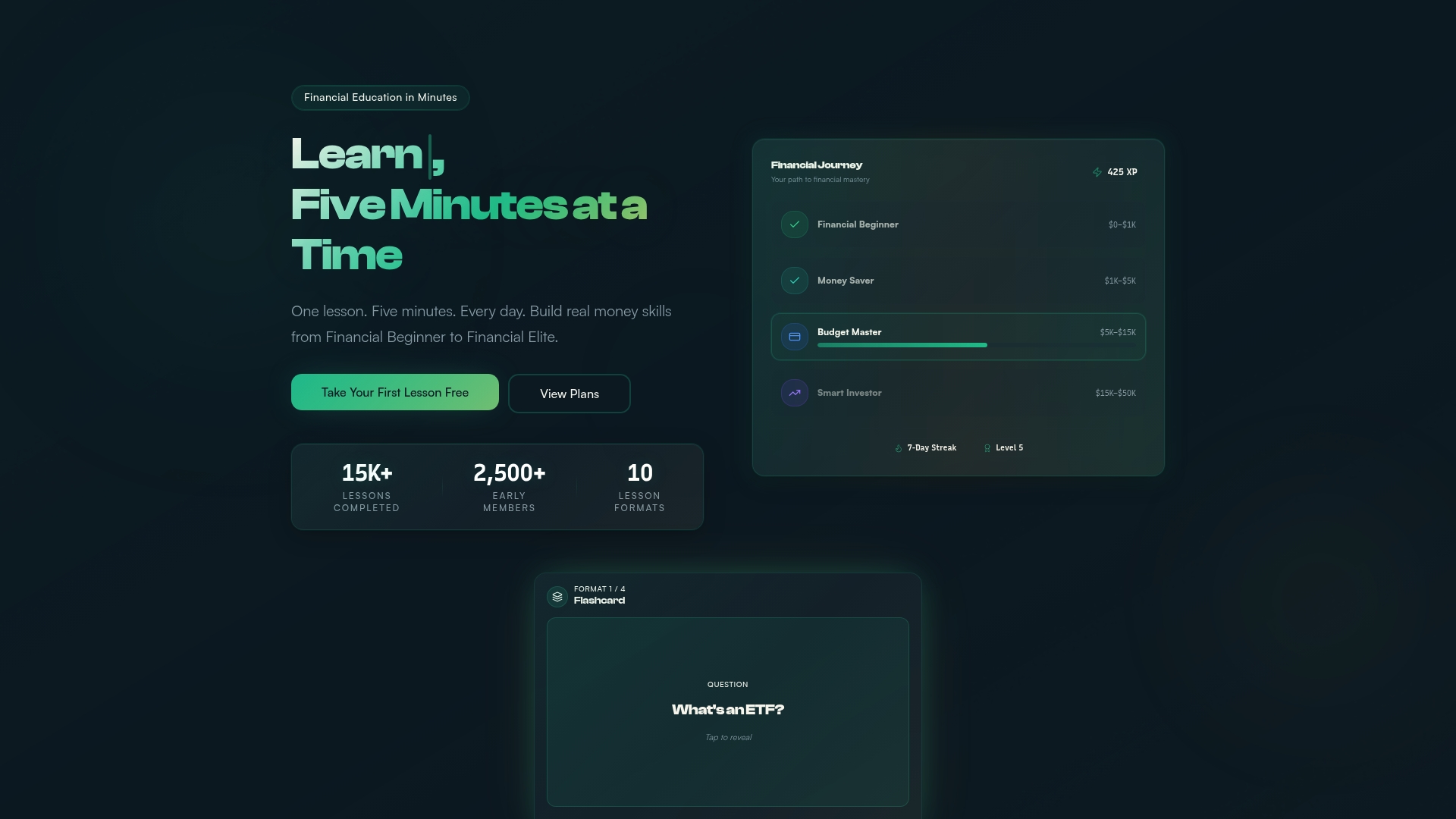
Minutementor is built for exactly where you are right now. The platform delivers five-minute daily lessons on budgeting, saving, and investing, tailored to your specific goals through an AI-powered personal finance coach. You do not need hours of study. You need consistent, focused practice that fits between classes or on your commute. Students on Minutementor track real progress, complete skill-building activities, and level up through gamified lessons that make learning money skills feel less like homework and more like building a superpower. Start your first lesson today and put everything in this article into practice immediately.
FAQ
What are the best smart money habits for high school students?
The most effective habits are paying yourself first, tracking weekly spending, budgeting with the 50-30-20 rule, and building a small emergency fund. Starting with a separate savings account and automating transfers removes the hardest part: remembering to save.
How much should a high school student save from each paycheck?
Save at least 20% of every paycheck or cash gift before spending anything else. If 20% feels too high to start, begin with 10% and increase it by 5% each month until saving becomes automatic.
What budgeting apps work best for teens?
Mobile banking apps from institutions like Citizens Bank offer goal tracking and spending alerts built in. Free tools like Google Sheets also work well. The best app is the one you will actually use every week.
Why does financial literacy matter in high school specifically?
The CFPB confirms that financial capability builds progressively, making high school the pivotal stage where practical habits form. Habits built now reduce financial stress in college and beyond.
How do I avoid overspending on social activities with friends?
Set a weekly spending limit for social activities and stick to it. Use student discounts and free alternatives when possible. Knowing your number before you go out removes the guesswork and the guilt.