A teen bank account is a joint or custodial checking account that lets you manage real money with a debit card, mobile app access, and parental oversight built in. When you open your first bank account as a teen, you start building the money habits that follow you into adulthood. Providers like Capital One MONEY and Chase First Banking offer fee-free youth accounts with no minimum deposit, making it easier than ever to get started. The best time to open one is when you have a steady allowance or your first job income to practice with, because real money makes the lessons stick.
How to open your first bank account as a teen
Two main account structures exist for teens: joint accounts and custodial accounts. A joint account means both you and a parent are legal co-owners. Either of you can deposit, withdraw, or monitor activity. A custodial account is controlled by the parent until you reach a certain age, typically 18, at which point ownership transfers to you.
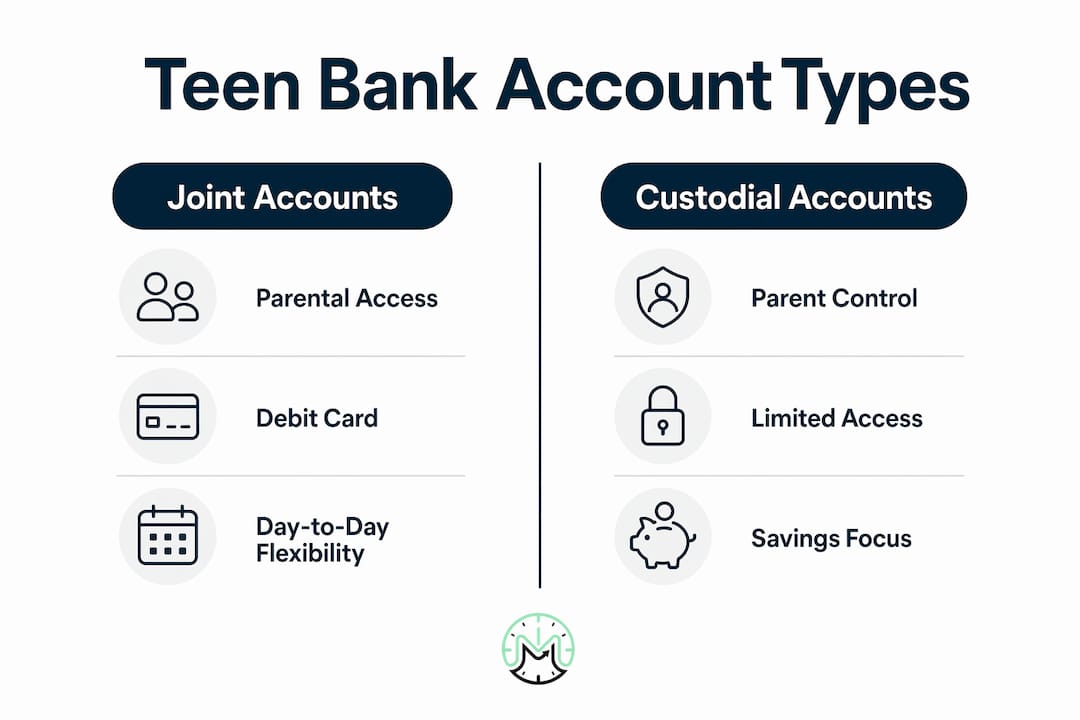
Most teens open joint checking accounts because they offer more day-to-day flexibility. You get a debit card, access to a mobile app, and the ability to check your balance anytime. Parents can set spending limits, receive alerts, and monitor transactions in real time. That combination of freedom and oversight is exactly what makes these accounts great for learning.

What features should you look for?
The best youth checking accounts share a few non-negotiable features:
- Zero monthly fees. Accounts like Capital One MONEY and Chase First Banking charge $0 in monthly fees with no minimum balance required. Never open a teen account that charges maintenance fees.
- Parental controls. Look for apps that let parents set spending limits, block certain merchant categories, and get instant transaction alerts.
- Mobile app access. You should be able to check your balance, deposit checks, and review spending from your phone.
- Debit card included. A physical debit card lets you practice real-world spending decisions.
- FDIC insurance. Every account at a federally insured bank protects your deposits up to $250,000.
Here is a quick comparison of two popular options:
| Feature | Capital One MONEY | Chase First Banking |
|---|---|---|
| Monthly fee | $0 | $0 |
| Minimum deposit | $0 | $0 |
| Parental controls | Yes, via app | Yes, via app |
| Debit card | Yes | Yes |
| Minimum age | 8+ | 6–17 |
| Online opening | Yes | Yes (with Chase account) |
Both accounts are solid starting points. Chase First Banking requires a parent to have an existing Chase checking account. Capital One MONEY does not, which gives it a slight edge for families without an existing Chase relationship.
What documents do teens and parents need?
Gathering your documents before you apply saves time and avoids delays. Both the teen and parent must provide specific identification and verification materials. Banks need this information to comply with federal identity verification laws.
What the teen needs:
- Social Security Number (SSN)
- Photo ID: a passport, driver's permit, or school-issued ID all work
- Birth certificate (some banks require this for applicants under 16)
- Current address
What the parent or guardian needs:
- Government-issued photo ID (driver's license or passport)
- Social Security Number
- Proof of address (a utility bill, lease agreement, or bank statement dated within 60 days)
In many states, minors cannot legally enter binding contracts. That is why banks require joint applications with a parent or guardian, and sometimes require both parties to appear in person to sign documents. Check the specific bank's policy before you show up, because some allow fully online applications while others mandate a branch visit.
Pro Tip: Scan or photograph all your documents before you go. If the bank needs copies, you can email them instantly rather than making a second trip.
Step-by-step: opening your first youth bank account
The process is straightforward when you know what to expect. Follow these steps and you will have your account open in under an hour.
-
Research and choose your account. Compare options like Capital One MONEY, Chase First Banking, and Bank of America's Advantage SafeBalance Banking for Students. Prioritize zero fees, parental controls, and a mobile app you actually want to use.
-
Check whether you can apply online. Some banks let you complete the entire application digitally. Others, due to legal restrictions on minors, require both you and your parent to visit a branch in person.
-
Complete the joint application with your parent. Both of you will fill out personal information, provide your SSNs, and submit your IDs. The bank will verify your identities before approving the account.
-
Opt out of overdraft protection. This step is critical. Opting out of overdraft protection means the bank will simply decline a transaction if you do not have enough funds, rather than charging you a $35 overdraft fee. That one decision protects you from turning a small mistake into a real financial hit.
-
Fund the account. Some banks require a small opening deposit, often $25 or less. Others require nothing. Transfer money from a parent's account or deposit cash at the branch.
-
Wait for your debit card. Your debit card arrives within 7–10 days. You will need to activate it by phone or through the bank's mobile app before you can use it.
Pro Tip: Set up account alerts the day you open. Most banking apps let you get a text or push notification for every transaction. Seeing each purchase in real time is one of the fastest ways to build spending awareness.
Once your card is active, log into the mobile app and explore every feature. Set a spending goal for your first month. Treat it like a game: track every dollar and see how close you get.
How to manage your teen bank account well
Opening the account is the easy part. Managing it well is where the real financial education for teens begins. The habits you build now will shape how you handle money at 25, 35, and beyond.
Check your balance before you spend
Make it a rule: check your balance before any purchase over $20. Most banking apps show your real-time balance on the home screen. This one habit prevents the majority of overdraft situations and keeps you aware of where your money is going.
Use direct deposit for allowance or job income
If you have a part-time job, set up direct deposit so your paycheck lands in your account automatically. If you receive a weekly allowance, ask a parent to transfer it on a set day each week. Consistent income into the account makes the learning experience practical and relevant, not just theoretical.
Avoid common pitfalls
Learning from mistakes is fine. Learning from other people's mistakes is better. Here are the most common errors teens make with their first accounts:
- Ignoring transaction history. Review your full transaction list at least once a week. You will spot patterns, catch errors, and stay honest with yourself about spending.
- Forgetting about pending transactions. A debit card purchase can take 1–3 days to fully clear. Your displayed balance may be higher than your actual available balance during that window.
- Skipping the spending limit conversation. Talk with your parent about what spending limits make sense. Clear boundaries prevent conflict and help you practice self-discipline.
- Not planning for irregular expenses. If you know a concert or school trip is coming up, set aside money in advance. Treat it like a mini savings goal inside your checking account.
For a deeper look at where teens go wrong with money, the guide on common teen money mistakes covers the most frequent errors and exactly how to fix them.
Plan for the transition at 18
When you turn 18, your joint teen account does not automatically become a solo adult account. Account ownership transition requires you to take explicit action, usually a branch visit or a formal request through the bank's app. Your parent may retain access until you complete those steps. Mark your 18th birthday on your calendar as a financial to-do.
Regular money conversations with your parent build the context that makes all of this click. The resource on financial conversations at home offers a practical framework for making those talks productive rather than awkward.
Level up your money skills with Minutementor
You have the account. Now build the knowledge to use it well.
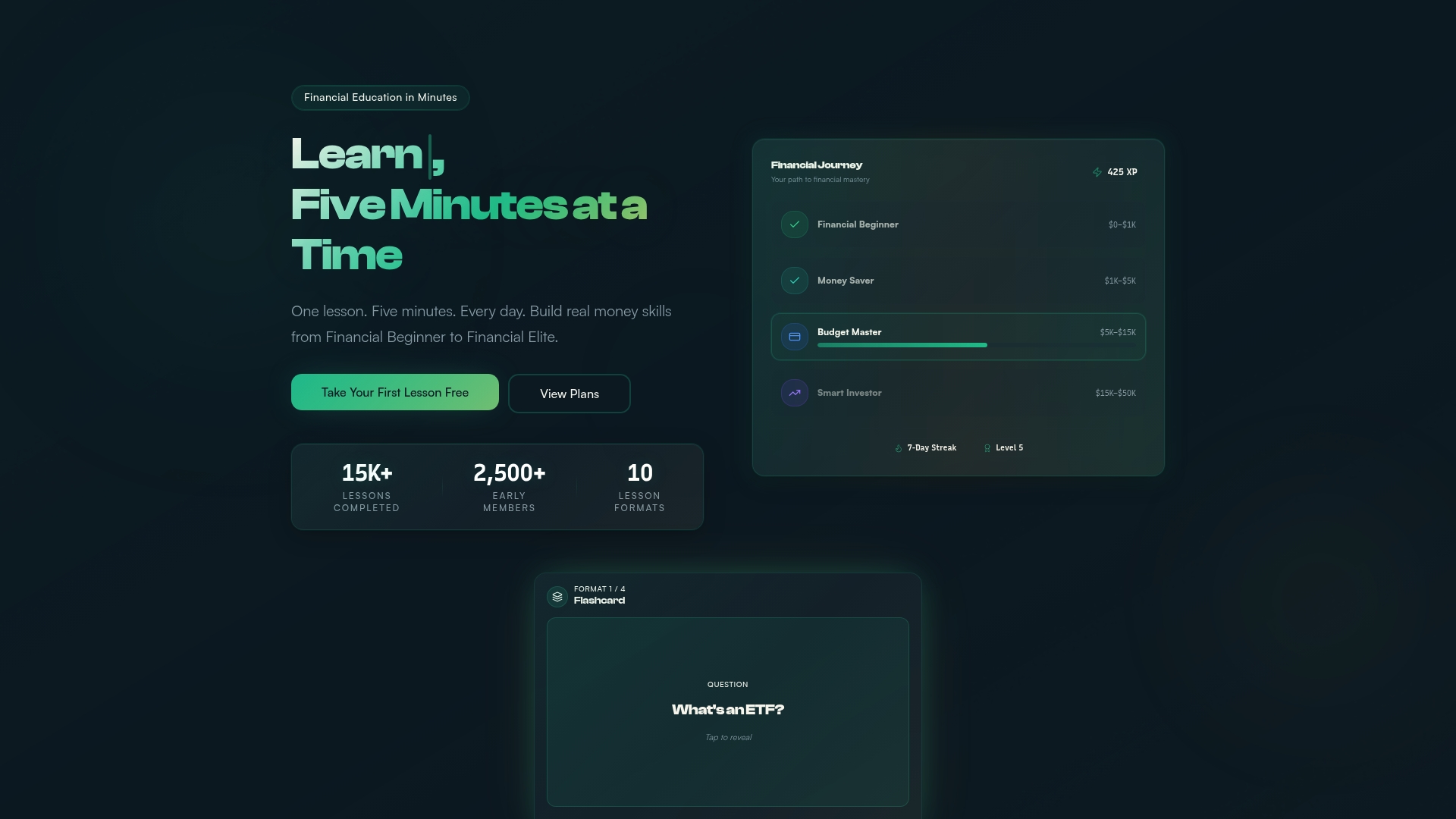
Minutementor delivers five-minute daily money lessons built specifically for students and young adults. The AI-powered coach inside the app creates a personalized learning path based on your goals, whether that is budgeting your first paycheck, understanding savings, or preparing to invest for the future. Progress tracking, streaks, and leaderboards make it feel like a game, but the skills you build are completely real. Thousands of students have used Minutementor to hit financial milestones faster than they expected. Start your first lesson today at Minutementor and turn your new bank account into the foundation of something bigger.
Key takeaways
Opening a teen bank account works best when you choose a fee-free joint account, gather the right documents, opt out of overdraft protection, and build consistent habits from day one.
| Point | Details |
|---|---|
| Choose a fee-free account | Capital One MONEY and Chase First Banking both charge $0 monthly fees with no minimum deposit. |
| Gather documents in advance | Both teen and parent need SSNs, photo IDs, and proof of address before applying. |
| Opt out of overdraft protection | Declining this feature at setup prevents $35 fees from punishing small spending mistakes. |
| Check your balance regularly | Reviewing transactions weekly builds spending awareness and prevents overdraft surprises. |
| Plan the transition at 18 | Converting a joint teen account to a solo adult account requires proactive steps from you. |
FAQ
What age can a teen open a bank account?
Most banks allow teens as young as 13 to open a joint checking account with a parent or guardian. Some accounts, like Chase First Banking, are available for children as young as 6.
Can a teen open a bank account without a parent?
No. Because minors cannot legally enter binding contracts in most states, banks require a parent or guardian to co-sign the application. The parent becomes a joint account holder.
What is the best bank for teens in 2026?
Capital One MONEY and Chase First Banking are two of the strongest options because both offer $0 monthly fees, parental controls, and mobile app access with no minimum deposit required.
Do teen bank accounts have fees?
Most dedicated teen checking accounts waive monthly maintenance fees entirely. Avoid any account that charges a monthly fee, since fee-free options are widely available.
What happens to a teen bank account at 18?
The account does not automatically convert to an individual adult account. You need to contact your bank directly to remove the joint owner and update the account to your name only.