Sending a clear, complete invoice with easy payment options is the single most effective way to get paid faster. The industry term for this practice is accounts receivable acceleration, but most freelancers and small business owners simply call it quick payment invoicing. Average business wait times hit 28.7 days, and invoices typically arrive 9.1 days late on top of that. The good news: the right invoicing habits cut that wait dramatically, and you can build those habits starting today.
What to include in your invoice to avoid payment delays
A delayed payment usually starts with a missing detail. Clients route invoices through accounts payable departments, and one wrong name or missing purchase order number sends your invoice to the back of the line.
Collect the following information from every client before you send a single invoice:
- Legal billing entity name. Use the exact registered company name, not a nickname or trade name.
- Accounts payable contact. Address the invoice to the person who actually processes payments.
- Purchase order (PO) number. Many corporate clients will not pay without one.
- Explicit due date. Ambiguous terms like "Net 30" confuse clients and delay processing. Write "Due: June 3, 2026" instead.
- Itemized service descriptions. Each line item should name the deliverable, the quantity, the rate, and the total.
- Your payment details. Bank account, ACH routing number, or payment link. Make it impossible to claim they didn't know how to pay.
Collecting legal billing details during the project intake phase, not at invoicing time, prevents delays of two weeks or more. Build a short intake form and send it with your contract.
Pro Tip: Add your logo, brand colors, and a short thank-you note to every invoice. Branded invoices get routed faster inside client organizations because they look professional and are harder to ignore.
| Invoice element | Why it matters |
|---|---|
| Legal billing entity name | Prevents accounts payable rejection |
| PO number | Required by most corporate clients |
| Explicit calendar due date | Removes ambiguity and speeds approval |
| Itemized line items | Reduces disputes and revision requests |
| Embedded payment link | Lets clients pay in one click |
How does technology speed up client payments?
Friction is the real enemy of fast payment. Clients are not always unwilling to pay. They are often just busy, and a multi-step payment process gives them an easy reason to delay. Reducing payment friction converts a multi-step process into a single-action impulse, and that shift changes everything.

Email invoicing with embedded payment links
Businesses using email invoicing with embedded payment links get paid 3–4 times faster than those using traditional paper or PDF methods. Average payment times drop from 30–45 days to 7–12 days, with 40–60% of clients paying within 24 hours. That is not a marginal improvement. It is a cash flow transformation.
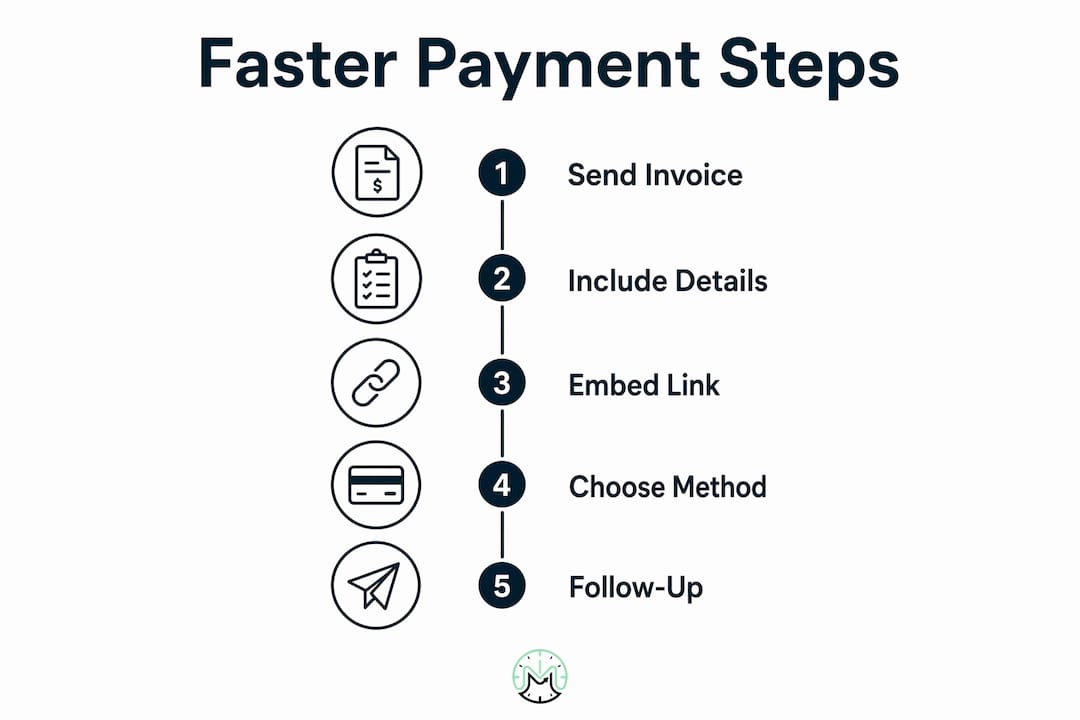
Invoices with embedded payment links push the payment rate to 92.7% within 14 days. Compare that to chasing a paper invoice for six weeks. The link removes every excuse: no check to write, no bank details to enter manually, no trip to the office.
Choosing the right payment method
Not all payment options are equal. Match your payment method to your client type.
| Payment method | Speed | Convenience | Typical fees |
|---|---|---|---|
| Credit card (online) | 1–2 business days | Very high | 2.5%–3.5% |
| ACH bank transfer | 2–3 business days | High | $0.25–$1.50 flat |
| PayPal / digital wallet | Same day to 1 day | Very high | 2.9% + $0.30 |
| Check (mailed) | 5–10 business days | Low | None |
| Wire transfer | Same day | Medium | $15–$30 flat |
Credit cards and digital wallets win on speed and convenience. ACH transfers win on cost for larger invoices. Mailed checks lose on every metric except fee. Offer at least two online options on every invoice so clients can choose what works for them.
Pro Tip: If your invoicing platform supports it, set credit card payment as the default option. Clients who see a "Pay Now" button click it. Clients who see bank routing numbers open a new tab and forget about it.
When and how to communicate for faster payment
Timing is as important as content. Invoicing immediately after job completion results in payment a median of 14 days sooner than invoicing a week later. The client's memory of the work is fresh, their satisfaction is high, and your invoice feels like a natural conclusion to the project.
Build a follow-up schedule
A professional follow-up schedule is not nagging. Payment reminders framed as professional service actually improve client relationships because they show you run a tight, organized operation.
Follow this sequence:
- Send the invoice within 24 hours of project completion or delivery.
- Send a confirmation the same day, noting the due date and payment options.
- Send a reminder 3–5 days before the due date. Keep it friendly and brief.
- Send a follow-up on the due date if payment has not arrived.
- Send a firm notice 7 days after the due date, referencing the original invoice number and amount.
- Escalate at 14 days overdue. Call the accounts payable contact directly.
- Send a final notice at 30 days overdue, referencing your late payment policy.
Each message should be short, professional, and specific. Include the invoice number, the amount, and the due date in every communication.
Write subject lines that get routed fast
Email subject lines that include the invoice number, your business name, and the due date speed up internal routing at the client's organization. A subject line like "Invoice INV-2026-031 from Hartley Studio, $4,200 due May 29" tells the accounts payable team exactly what to do before they open the email. Generic subject lines like "Invoice attached" get buried.
Pro Tip: For recurring clients, set up a milestone-based invoicing schedule at the start of every project. Agree on payment dates in writing. This removes the awkwardness of chasing payment and builds a predictable cash flow rhythm.
Consider early payment discounts for high-value clients
Early payment discounts work best with high-value clients where the margin trade-off is worth the cash flow gain. A typical offer is 2% off the total if paid within 10 days. That small discount is almost always cheaper than the cost of chasing an overdue invoice for 30 days. Use this tool selectively, not as a blanket policy.
What mistakes slow down your payments?
Most payment delays are self-inflicted. The fix is usually a process change, not a difficult conversation.
- Waiting to collect billing details. Asking for a PO number after you send the invoice adds days or weeks. Collect everything during intake.
- Using vague payment terms. "Net 30" means different things to different clients. An explicit calendar date removes all ambiguity.
- Sending invoices late. Every day you wait to invoice is a day added to your payment timeline. Send within 24 hours of delivery.
- Offering only one payment method. Clients who cannot pay the way they prefer will delay. Offer at least two online options.
- Skipping follow-ups. Invoices get lost in inboxes. A single reminder can recover a payment that would have sat for weeks.
- Leaving out late payment terms. If your invoice does not state a late fee, you have no leverage. Include a clear late payment policy on every invoice.
The most common invoicing mistake is treating billing as an afterthought. Freelancers who build invoicing into their project workflow, not as a separate task, consistently get paid faster and with fewer disputes.
Good cash flow management starts with knowing exactly when money is coming in. Accurate, timely invoicing is the foundation of that knowledge.
Key takeaways
Sending a complete, clearly dated invoice with embedded payment links immediately after project delivery is the fastest path to getting paid on time.
| Point | Details |
|---|---|
| Collect billing details early | Gather legal entity name, PO number, and AP contact during intake, not at invoice time. |
| Use explicit due dates | Write a calendar date like "Due: June 3, 2026" instead of vague terms like "Net 30." |
| Embed payment links | Invoices with payment links achieve a 92.7% payment rate within 14 days. |
| Invoice within 24 hours | Sending immediately after delivery results in payment a median of 14 days sooner. |
| Follow a reminder schedule | Send reminders at 3–5 days before due, then at 7, 14, and 30 days overdue. |
Build stronger money skills with Minutementor
Getting paid faster is one piece of a bigger financial picture. Freelancers and small business owners who understand cash flow, budgeting, and client billing strategies make better decisions across the board.
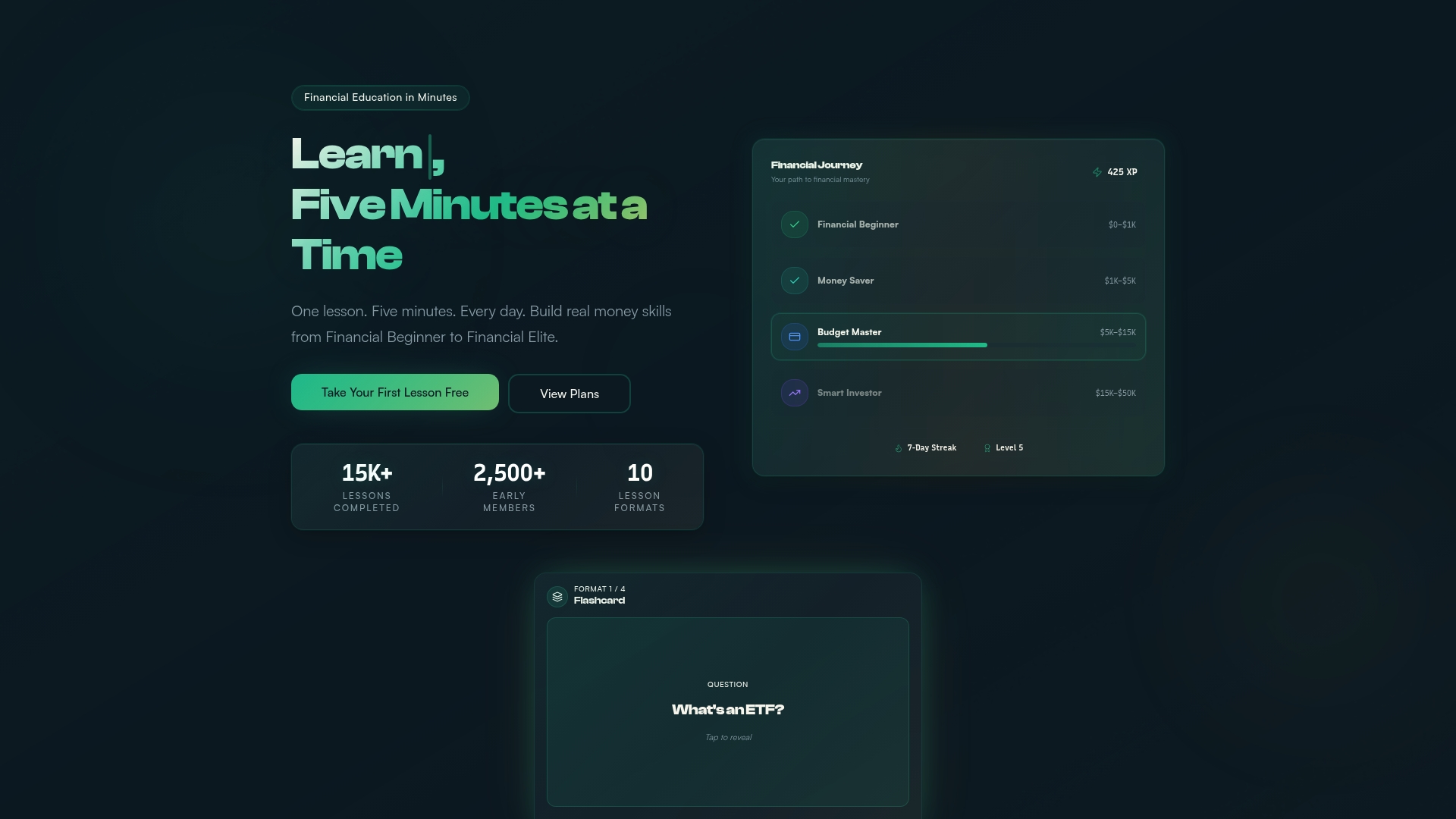
Minutementor delivers five-minute daily lessons on exactly these topics, from managing your cash flow to building billing habits that hold up under pressure. The platform's AI-powered coach tailors your learning path to your specific goals, whether that is improving payment speed, managing irregular income, or building a financial buffer. If you want to level up your money skills without sitting through a finance course, Minutementor is built for that.
FAQ
How do I invoice clients for faster payment?
Send invoices within 24 hours of project completion, include an explicit calendar due date, and embed a payment link. Businesses using email invoicing with payment links get paid 3–4 times faster than those using traditional methods.
What should every invoice include?
Every invoice needs the client's legal billing entity name, a PO number if required, an itemized list of services, an explicit due date, and at least two online payment options.
How often should I follow up on unpaid invoices?
Send a reminder 3–5 days before the due date, then follow up at 7, 14, and 30 days overdue. Professional, consistent reminders increase on-time payment rates without damaging client relationships.
Do early payment discounts actually work?
Yes, especially with high-value clients. A 2% discount for payment within 10 days is typically cheaper than the time and cost of chasing an overdue invoice for 30 or more days.
Why do clients pay faster with online payment options?
Online payment options remove friction. Clients who can pay in one click do so immediately. Clients who must write a check or wire funds manually tend to delay, often unintentionally.