
Gift money is defined as any lump sum received outside your regular income, including cash gifts, inheritances, birthday checks, and financial windfalls. Knowing how gift money should be managed separates people who build lasting wealth from those who spend it and wonder where it went. The IRS, FDIC, and financial planning frameworks like the 401(k) system all have direct implications for how you handle these funds. Get the first moves right, and a single gift can change your financial trajectory for years.
How gift money should be managed from day one
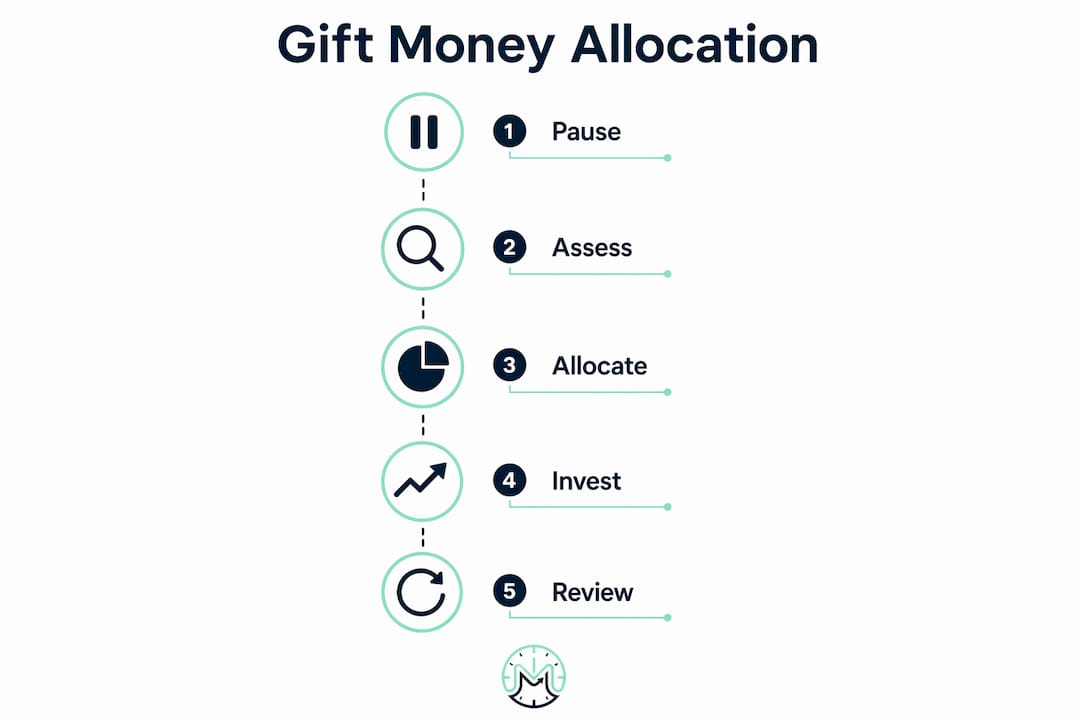
The single most important rule after receiving gift money is this: do not spend it yet. Experts recommend waiting at least 30 days before making any major financial decisions. That pause gives you time to assess your full financial picture, consult a professional if needed, and avoid the regret that comes from impulsive choices.

Your first move is to park the money somewhere safe. FDIC- or NCUA-insured accounts protect your principal up to $250,000 per account holder per institution. A high-yield savings account or a cash management account at a brokerage like Fidelity or Charles Schwab works well here. You earn some interest while you plan, and your money is fully protected.
Here is what to do in the first 30 days:
- Deposit funds immediately into an FDIC- or NCUA-insured account before doing anything else.
- Check for tax liability. Inherited funds above the federal estate tax threshold, or gifts from foreign sources, may carry tax obligations. Confirm with a CPA before spending.
- Avoid telling too many people. Sudden wealth attracts requests for loans and gifts that are hard to refuse.
- Write down your financial goals so you have a reference point when the excitement fades.
Pro Tip: If your gift exceeds $250,000, split it across multiple FDIC-insured institutions or use a cash management account that automatically sweeps funds across partner banks. This keeps every dollar protected while you decide what to do next.
How to allocate gift money across spending, saving, and investing
A structured allocation plan is the most reliable way to get lasting value from gift money. A common expert guideline is to direct 10% to 25% toward discretionary spending and put the rest to work in savings, debt payoff, and investing. That means if you receive $10,000, you might spend $1,000 to $2,500 on something meaningful and deploy the rest strategically. This balance lets you enjoy the gift without sacrificing its long-term potential.
Follow this priority order when allocating the remainder:
- Build or top off your emergency fund. Three to six months of living expenses is the standard target. If you have dependents, a variable income, or work in a volatile industry, aim for the higher end.
- Pay off high-interest debt. Any debt carrying an interest rate above roughly 7% should be eliminated before you invest. Paying off high-interest debt delivers an instant, risk-free return equal to the interest rate you eliminate.
- Max out tax-advantaged accounts. Contribute to your 401(k) up to the 2026 IRS limit of $23,500, or fund a Roth IRA or traditional IRA. These accounts grow tax-free or tax-deferred, compounding your gains over time.
- Invest remaining funds. Low-cost index funds through platforms like Vanguard or Fidelity are a proven starting point for longer-term growth.
Pro Tip: Write your allocation plan down before you move a single dollar. Research on written allocation plans shows they reduce impulsive decisions and increase the likelihood you will stick to your strategy. Even a simple note on your phone counts.
What to know when managing gift money for minors
Gift money given to a child requires a different approach than funds you manage for yourself. The most common vehicle is a custodial account under the Uniform Gifts to Minors Act (UGMA) or the Uniform Transfers to Minors Act (UTMA). These accounts let an adult manage the funds on behalf of a minor until the child reaches the state-mandated age of majority, which ranges from 18 to 25 depending on the state.
There are several facts every parent or grandparent should understand before opening one:
- The gift is irrevocable. Once money is deposited into a UGMA or UTMA account, it legally belongs to the child. You cannot take it back.
- The custodian manages but does not own the funds. You can invest and spend the money for the child's benefit during the custodial period.
- Control transfers completely at legal age. When the child reaches the age of majority, they gain full access and can spend the money however they choose.
- Custodial accounts affect financial aid. Because the account is the child's asset, it is assessed at a higher rate than parental assets in federal financial aid calculations.
| Feature | UGMA/UTMA custodial account |
|---|---|
| Ownership | Child's asset from day one |
| Custodian control | Until child reaches age of majority (18–25) |
| Investment options | Stocks, bonds, mutual funds, ETFs |
| Financial aid impact | Higher assessment rate than parental assets |
| Flexibility | Funds usable for any child benefit |
If you want to retain more control over how and when the funds are used, a trust is a stronger option. Trusts allow you to set conditions on distributions, such as requiring the child to reach a certain age or achieve a specific milestone before accessing the money.
Should you invest gift money for long-term growth?
Investing gift money is one of the best ways to use it, but only after liquidity and debt are addressed. The right investment approach depends on your time horizon. Pre-assigning buckets for short-term liquidity and long-term growth prevents you from selling investments at the wrong time to cover an emergency.
For money you will not need for five or more years, diversified low-cost index funds are the standard recommendation from financial planners. Vanguard's Total Stock Market Index Fund and Fidelity's ZERO funds charge near-zero expense ratios and give you broad market exposure. For education savings, 529 plans allow a lump sum contribution of up to $90,000 per individual over five years through a special election, making them a powerful vehicle for gift money earmarked for a child's future.
Key investing principles for gift money:
- Match the investment to the timeline. Money needed within two years stays in cash or short-term bonds. Money for retirement goes into equities.
- Automate contributions. Setting up automated investment transfers removes emotion from the process and builds the habit of consistent investing.
- Avoid chasing hot investments. Cryptocurrency tips, single stocks, and trending assets are where windfall money most often disappears.
- Review your allocation annually. A written plan reviewed once a year keeps your portfolio aligned with your goals as life changes.
The 2026 IRS contribution limit for 401(k) plans is $23,500, and the IRA limit is $7,000 for most individuals. Maxing these out before investing in taxable accounts is almost always the smarter move because the tax savings compound over decades.
Common pitfalls to avoid when managing a financial windfall
The most common mistake people make with gift money is spending before securing it and understanding the tax picture. This single error leads to principal loss and unexpected tax bills that shrink the gift before you have had a chance to plan. Awareness of the traps is half the battle.
Watch out for these specific pitfalls:
- Lifestyle inflation. Upgrading your apartment, car, or wardrobe based on a one-time gift creates ongoing expenses you cannot sustain.
- Lending to friends or family. Informal loans from gift money rarely get repaid and damage relationships. If you want to help someone, treat it as a gift with a fixed amount, not an open-ended loan.
- Keeping gift money in your regular checking account. Mixing it with everyday spending makes it disappear without a trace. Keep it in a separate account until your allocation plan is in place.
- Falling for scams. Sudden wealth attracts fraud. Be skeptical of investment opportunities that appear immediately after you receive funds.
"Intentional, written plans reduce regret and increase lasting financial benefit." This is not motivational advice. It is the documented outcome of how people who keep their windfall money differ from those who lose it within two years.
Pro Tip: For any gift above $25,000, consider a one-hour session with a fiduciary financial advisor. A fiduciary is legally required to act in your interest, not earn a commission. The fee is usually $200 to $500 and can save you thousands in avoidable mistakes.
Having a trusted resource for family money conversations also helps when gift money involves multiple family members or generational wealth decisions.
Key takeaways
Managing gift money well requires securing it first, allocating it by priority, and investing what remains with a written plan tied to your time horizon.
| Point | Details |
|---|---|
| Pause before spending | Wait at least 30 days and park funds in an FDIC-insured account before making decisions. |
| Allocate by priority | Direct 10%–25% to discretionary spending; use the rest for emergency funds, debt, and investing. |
| Manage minors' gifts carefully | UGMA/UTMA accounts are irrevocable and transfer full control to the child at legal age. |
| Use tax-advantaged accounts first | Max out your 401(k) up to $23,500 and IRA up to $7,000 before investing in taxable accounts. |
| Write your plan down | A written allocation plan reduces impulsive decisions and improves long-term outcomes. |
Build your money skills with Minutementor

Knowing how to allocate gift money is one skill. Building the financial literacy to make every money decision with confidence is another. Minutementor delivers five-minute daily lessons on budgeting, investing, debt management, and more, all personalized by an AI-powered coach that adapts to your goals. Whether you are a student who just received a graduation gift or a parent managing funds for your kids, Minutementor gives you a clear path forward. Start with the free financial education tools on the platform, or explore Minutementor's pricing to find the plan that fits your situation. Level up your money skills one lesson at a time.
FAQ
What is the first thing to do with gift money?
Deposit the funds into an FDIC- or NCUA-insured account immediately and wait at least 30 days before making major spending or investment decisions. This protects your principal and gives you time to plan without pressure.
How should I split gift money between spending and saving?
A widely used guideline directs 10% to 25% toward discretionary spending and the remainder toward emergency savings, high-interest debt payoff, and investing. The exact split depends on your current financial situation and existing debt load.
Can I invest gift money in a 401(k) or IRA?
You can use gift money to free up earned income for retirement contributions, but you cannot directly deposit gift money into a 401(k) or IRA since contributions must come from earned income. The 2026 IRS limit is $23,500 for 401(k) plans and $7,000 for IRAs.
What happens to gift money in a custodial account when a child turns 18?
Once the child reaches the state-mandated age of majority, typically 18 to 25, full control of the account transfers to them. The gift is irrevocable, meaning the original donor cannot reclaim the funds regardless of how the child chooses to use them.
Should I pay off debt or invest gift money first?
Pay off any debt with an interest rate above roughly 7% before investing. Eliminating high-interest debt delivers a guaranteed, risk-free return equal to the rate you eliminate, which most investments cannot reliably beat over the short term.