Cash flow management is the process of tracking and controlling the actual movement of money into and out of your personal finances during a specific period. Unlike profit on paper, cash flow shows you what you can actually spend right now. Understanding how cash flow management works gives you a real-time picture of your financial health, so you can budget with confidence instead of guessing. Tools like personal cash flow statements and forecasting techniques, referenced by sources including Experian, Vanguard, and BlackpeakCFO, make this process concrete and repeatable.
How cash flow management works: the core mechanics
Cash flow management tracks actual money movement, not accounting profits. That distinction matters more than most people realize. You can earn a solid salary and still run short on cash if your bills hit before your paycheck clears. Cash flow differs from profit because it focuses on liquidity, which is what keeps your daily finances running.
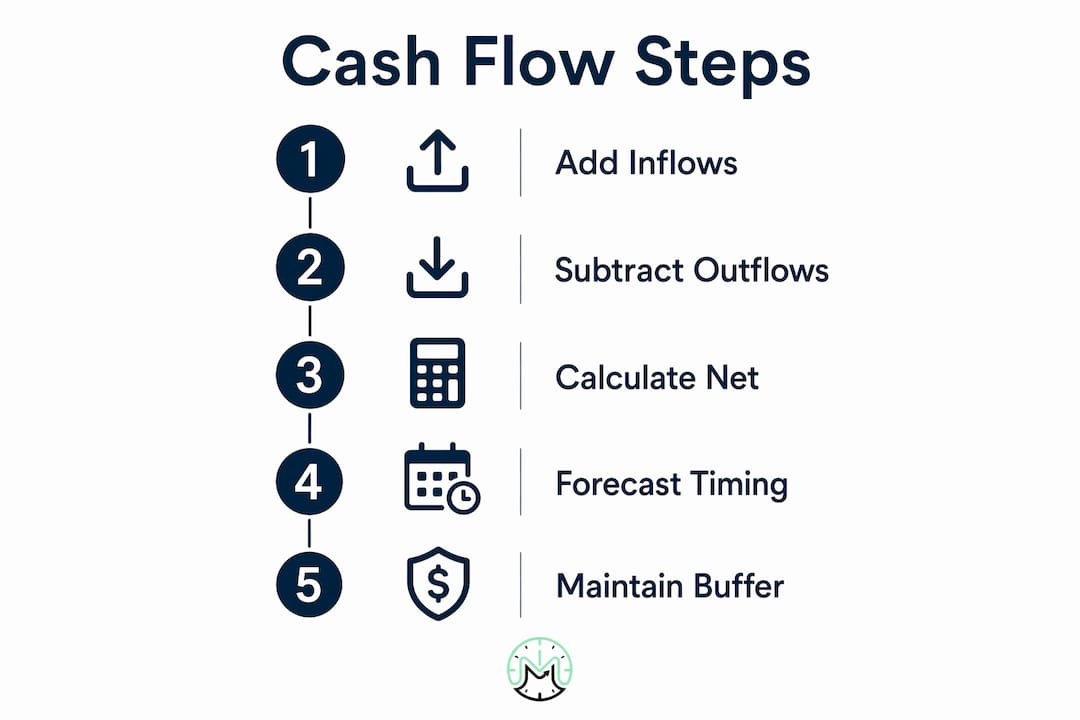
The core mechanic is simple. Add up every dollar coming in during a period. Subtract every dollar going out. The result is your net cash flow. A positive number means you have breathing room. A negative number means you are spending more than you receive, and that gap needs a fix before it becomes a crisis.

Cash flow management also involves timing. A bill due on the 1st and a paycheck arriving on the 5th creates a four-day gap that can trigger a late fee or an overdraft. Recognizing these timing mismatches is what separates reactive budgeting from proactive financial planning.
How to create a personal cash flow statement
A personal cash flow statement is built by listing all income sources, listing all expenses, and subtracting total outflows from total inflows. Experian describes this as the foundation of personal cash flow analysis. Start with your inflows.
Cash inflows to list:
- Regular paychecks or salary deposits
- Freelance or gig income
- Investment dividends or rental income
- Government benefits or child support
- Any other recurring cash receipts
Next, list every outflow. Split them into fixed expenses (rent, loan payments, insurance) and variable expenses (groceries, gas, entertainment). Fixed costs stay the same each month. Variable costs shift, which is where most overspending hides.
Here is a simple example of what a monthly cash flow statement looks like:
| Category | Amount |
|---|---|
| Paycheck | $3,200 |
| Freelance income | $400 |
| Total inflows | $3,600 |
| Rent | $1,100 |
| Utilities | $150 |
| Groceries | $300 |
| Transportation | $200 |
| Subscriptions | $80 |
| Entertainment | $120 |
| Total outflows | $1,950 |
| Net cash flow | +$1,650 |
A positive net cash flow of $1,650 means you have funds available for savings or debt payoff. A negative result means you need to cut outflows or increase inflows before the next period.
Pro Tip: Pull three months of bank statements before building your first cash flow statement. Real spending data beats estimates every time.
Why does cash flow timing matter more than monthly averages?
Most people budget by monthly averages. That approach misses the real problem: cash does not arrive and leave in neat, even flows. Forecasting by actual cash banking events, not averages, is the single biggest upgrade you can make to your personal finance system.
A rolling 13-week cash flow forecast, adapted from business finance by BlackpeakCFO, gives you a week-by-week view of when money actually hits your account and when it leaves. For personal use, this means mapping your paycheck dates, bill due dates, and irregular expenses across a 13-week window. You will quickly spot weeks where outflows cluster and cash runs thin.
Here is how to build a basic personal cash flow forecast:
- List every income event by date. Write down each paycheck date and the exact amount expected.
- List every bill by due date. Include rent, utilities, subscriptions, loan payments, and any irregular bills you know are coming.
- Add irregular expenses. Car registration, annual insurance premiums, and holiday spending all belong here.
- Calculate the running balance week by week. Start with your current bank balance and add or subtract each event as it falls.
- Flag negative weeks. Any week where the running balance dips below your comfort threshold needs a plan before it arrives.
- Update weekly with actual figures. Replacing assumptions with real cash movements prevents false confidence and keeps your forecast accurate.
Pro Tip: Set a 10-minute calendar block every Sunday to update your forecast with the week's actual deposits and payments. Consistency beats perfection here.
What are cash flow buffers and why do you need them?
Cash buffers are reserves you hold specifically to absorb timing shocks and irregular expenses. Vanguard recommends holding around three months of expenses as spending cash, separate from a longer-term emergency fund. That guidance applies directly to personal budgeting.
Buffers turn unpredictable shocks into planned, prefunded events. Without a buffer, a $600 car repair forces you to choose between a credit card, a late bill, or a dip into savings. With a buffer, it is just a withdrawal from a fund you already built.
There are two types of buffers worth knowing:
| Buffer type | Purpose | How to build it |
|---|---|---|
| Spending cash buffer | Covers timing gaps between income and bills | Hold 1–3 months of fixed expenses in a checking or savings account |
| Emergency cash fund | Covers unexpected income loss or large surprise costs | Build to 3–6 months of total expenses in a separate high-yield account |
| Sinking fund | Covers known future irregular expenses | Divide the total expected cost by months until due and save that amount monthly |
Sinking funds deserve special attention. A sinking fund works by dividing a known future expense into monthly contributions. If your car registration costs $360 and it is due in six months, you set aside $60 per month starting now. No scramble, no debt. Sinking funds effectively prevent reliance on high-interest debt by allocating funds before expenses occur.
Pro Tip: Label each sinking fund by its purpose in your banking app. "Car registration," "holiday gifts," and "annual subscriptions" are clearer than a generic savings account.
How to improve your cash flow day to day
Good cash flow management is a habit, not a one-time setup. The most effective daily practices combine tracking, automation, and regular review. Here is what that looks like in practice:
- Track spending weekly, not monthly. Weekly spending reviews catch overspending before it compounds. A quick check of your bank app on Sunday takes five minutes and saves you from month-end surprises.
- Automate bill payments and savings transfers. Automation removes the decision from recurring tasks and eliminates late fees. Set savings transfers to run the day after your paycheck lands.
- Collect income early if you freelance. Send invoices the moment work is complete. Planning finances around due dates and collecting income promptly reduces the gap between earning and receiving.
- Align bill due dates with your pay schedule. Call service providers and ask to shift due dates. Most will accommodate a request to move a bill from the 1st to the 10th if your paycheck arrives on the 5th.
- Pair your budget with your cash flow statement. A budget tells you the plan. Your cash flow statement tells you the reality. Comparing the two regularly shows where timing or spending has drifted.
- Act fast when cash flow turns negative. A negative net cash flow for one month is a warning. Two months in a row is a pattern. Cut a variable expense, pause a subscription, or pick up extra income before the gap widens.
Building these smart money habits early makes cash flow management feel automatic rather than stressful. The goal is not perfection. The goal is awareness, so you always know where you stand.
Minutementor makes cash flow skills click
Knowing the theory is one thing. Applying it to your own money is where most people get stuck.

Minutementor is built for exactly that gap. The platform delivers five-minute daily lessons on budgeting, cash flow, and personal finance through an AI-powered coach that adapts to your specific goals. Whether you are building your first cash flow statement or setting up sinking funds, Minutementor walks you through each step at your own pace. Progress tracking and gamified lessons keep you motivated without the overwhelm. Students and young professionals have used Minutementor to save thousands and hit real financial milestones. Start building your skills today and put everything in this article into practice.
FAQ
What is cash flow management in personal finance?
Cash flow management is the practice of tracking all money coming in and going out of your finances during a set period. The goal is to maintain a positive net cash flow and avoid liquidity shortfalls.
How is cash flow different from profit?
Cash flow measures actual money movement and liquidity, while profit measures earnings on paper. You can appear profitable but still run short on cash if income and expenses are poorly timed.
What is a sinking fund and how does it help cash flow?
A sinking fund is a dedicated savings pool for a known future expense, built by saving a fixed amount each month. It prevents surprise costs from forcing you into high-interest debt.
How often should I update my cash flow forecast?
Update your forecast weekly by replacing estimated figures with actual deposits and payments. Weekly updates keep your forecast accurate and prevent decisions based on outdated assumptions.
What is a good cash buffer to hold?
Vanguard recommends holding around three months of expenses as a spending cash buffer, separate from a longer-term emergency fund. This covers timing gaps and unexpected costs without disrupting your main savings.
Key takeaways
Cash flow management works by tracking real money movement, forecasting by actual timing events, and holding buffers that absorb shocks before they become debt.
| Point | Details |
|---|---|
| Track real money movement | Build a personal cash flow statement by listing all inflows and outflows, then calculate net cash flow. |
| Forecast by timing, not averages | Use a rolling week-by-week forecast to spot cash shortfalls before they arrive. |
| Build cash buffers | Hold one to three months of expenses as a spending buffer and use sinking funds for known irregular costs. |
| Automate and review weekly | Automate savings and bill payments, then review actual spending every week to catch drift early. |
| Act on negative cash flow fast | Two consecutive months of negative net cash flow signals a pattern that needs an immediate spending or income adjustment. |