
A bank is a financial institution that keeps money safe, records balances digitally, and lends funds to others to help the economy grow. Understanding how banks work for kids is one of the most practical financial literacy lessons you can give your child. Only 23 U.S. states require high school finance courses, which means most kids will only learn banking basics if a parent teaches them. The good news: you do not need to be a financial expert. You just need the right framework.
How banks work for kids: the core idea explained simply
A bank does three things: it stores your money safely, it pays you a small reward for keeping money there, and it lends your money to other people who need it. That last part surprises most kids. Their money does not just sit in a vault waiting for them.
Banks operate on a system called fractional reserve banking. In simple terms, banks keep roughly 10% of deposits in reserve and lend out the rest. That lending is how banks fund mortgages, small business loans, and car payments across your community. It also explains why banks can afford to pay you interest. Your savings are working while you sleep.

Think of a bank as a matchmaker between savers and borrowers. Savers earn interest because the bank is using their money productively. Borrowers pay interest because they are getting access to money they do not yet have. The bank earns a profit on the difference between those two rates. That is the entire business model, explained in three sentences.
One more concept worth teaching early: a bank card is not money. A card accesses digital balances stored in the bank's system. The actual funds are pooled with other depositors' money and tracked electronically. Kids who understand this distinction are far less likely to treat a debit card like a magic spending device.
Here are the core banking terms every parent should introduce:
- Deposit: putting money into your account
- Withdrawal: taking money out
- Balance: the total amount currently in your account
- Interest: money the bank pays you for keeping funds there
- Loan: money the bank lends to a borrower, who repays it with interest
Pro Tip: Use a clear jar at home to show how a "bank" works. Put in coins, take some out for a "loan," and add a penny each week as "interest." Physical props make abstract concepts click for kids under 10.
What are kids' bank accounts and how do they work?
Kids cannot open bank accounts on their own. Accounts for minors require parental custodial or joint ownership, which means a parent or guardian is a legal party to the account. That structure gives you oversight while giving your child real experience managing money.
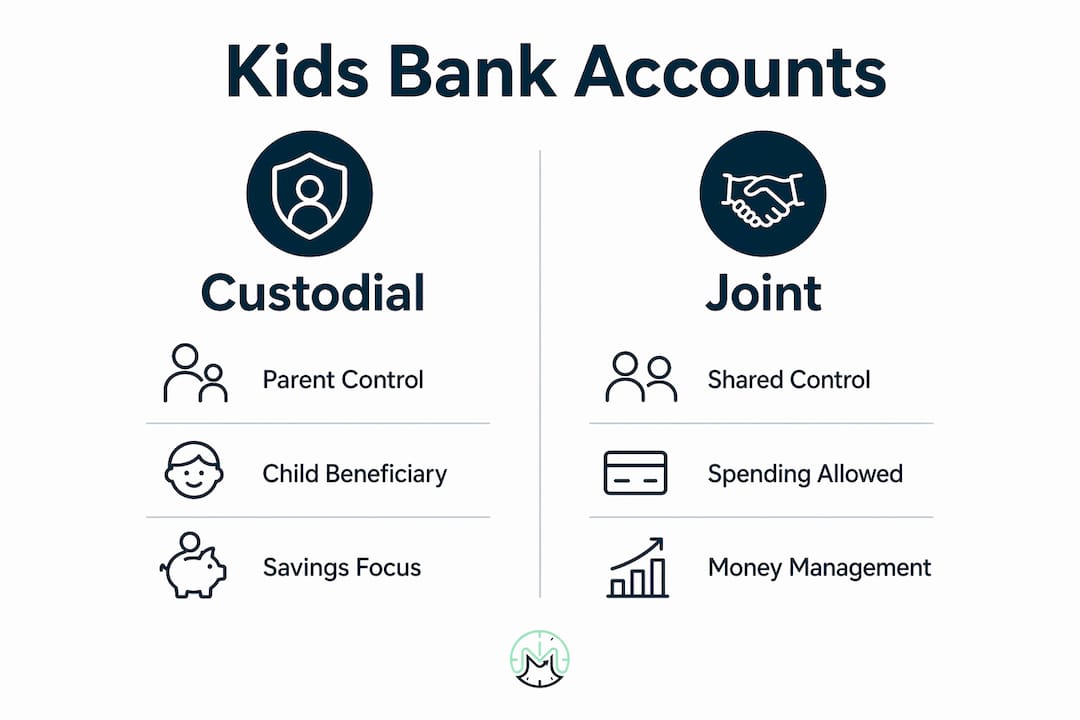
The two main account types differ in control level:
| Account Type | Who Controls It | Best For |
|---|---|---|
| Custodial account | Parent controls; child is beneficiary | Younger kids, ages 5–12 |
| Joint account | Both parent and child have equal access | Teens learning independence |
| Student savings account | Child uses with parental monitoring | Ages 13 and up |
Most kids' accounts come with no monthly fees, low or no minimum balances, and built-in educational tools. Banks like Chase, Alliant Credit Union, and Capital One offer accounts specifically designed for minors. Many include mobile apps where kids can check their balance, set savings goals, and watch their money grow.
Safety is built in at the federal level. FDIC insurance protects deposits up to $250,000 per depositor per bank. That means even if a bank fails, your child's money is covered. This is a powerful trust-building fact to share with kids who worry about putting their birthday money "somewhere they can't see it."
Parents acting as custodians can use apps and digital debit cards to teach money management with full parental controls. You can set spending limits, receive notifications for every transaction, and block certain merchant categories. That level of visibility turns every purchase into a teachable moment.
Pro Tip: Open a savings account with your child present at the bank or on the app. Let them make the first deposit themselves. The act of physically handing over money and watching the balance update builds a real connection to the concept of saving.
How do different teaching methods compare for banking basics?
Not all teaching approaches work equally well. The method you choose should match your child's age and how they currently think about money. Financial literacy is most effective when it is age-appropriate and hands-on.
Physical money before digital apps is the right sequence for children under 7. Young kids cannot yet grasp that a number on a screen represents real value. Coins and bills they can touch, count, and sort give them a concrete foundation. Once that foundation exists, digital tools reinforce it rather than confuse it.
The FDIC's Money Smart for Young People curriculum offers 6 to 22 lessons per grade band, covering PreK through 12th grade. It uses characters named Isabella and Noah to walk kids through concepts like saving, spending decisions, and how banks earn money. The curriculum is free, downloadable, and built around the same learning-by-doing principles that research supports.
Common teaching methods and their strengths:
- Play money and home banks: Simulate deposits, withdrawals, and interest payments at the kitchen table. Works best for ages 5–10.
- Coin counting and savings tracking: Use a chart on the fridge to track weekly savings progress. Visual progress motivates kids to keep going.
- Educational board games: Games like Monopoly and The Game of Life teach resource management in a low-stakes environment.
- Digital apps with parental controls: Tools like Greenlight and BusyKid let kids manage a real debit card with parent oversight. Best introduced after age 7.
- Classroom or library simulations: Some schools run mock banks where kids deposit, earn interest, and apply for small "loans." Learning by doing builds stronger financial habits than lectures alone.
Pitfalls to avoid: do not introduce credit card concepts before a child understands debt. Do not use money as punishment or reward for behavior, as this creates an unhealthy emotional relationship with finances. And do not skip the "why" behind every rule. Kids who understand the reason behind saving are far more likely to stick with it.
Practical tips for teaching banking basics by age
Financial education should start at age 5, according to child development experts. The concepts you introduce at each stage should match what your child can actually process cognitively. Check out age-appropriate money lessons for a detailed breakdown by developmental stage.
Here is a practical roadmap by age group:
-
Ages 5–7: Needs vs. wants. Start with the most concrete distinction in personal finance. Use grocery shopping as a live classroom. Ask your child: "Do we need this, or do we want it?" This single habit builds the decision-making muscle that underlies all future money choices.
-
Ages 8–10: How saving grows money. Introduce interest with a simple home experiment. Give your child $1.00 and promise to add 10 cents every week it stays in their "home bank." After 10 weeks, they have $2.00. That experience makes compound growth real before the math gets complicated.
-
Ages 11–13: How banks lend money. Explain fractional reserve banking using the matchmaker analogy. Their $100 in savings helps a neighbor get a small business loan. The neighbor pays back $110. The bank keeps a small cut and gives your child a few cents as interest. The whole system clicks.
-
Ages 14–16: Checking accounts and debit cards. Open a joint checking account and give your teen a debit card with a set monthly budget. Review statements together monthly. Discuss every overdraft or unexpected charge without judgment. The goal is awareness, not perfection.
-
Ages 17+: Credit, loans, and financial goals. Introduce credit scores, student loans, and the cost of borrowing. Use free resources and financial simulators to model real decisions. The financial milestones guide from Minutementor covers this progression in detail.
Modeling matters as much as teaching. Kids who see parents check account balances, discuss bills openly, and make deliberate spending choices absorb those habits without being told. Financial conversations at home are one of the strongest predictors of adult financial confidence.
Pro Tip: Let your child make a small financial mistake while the stakes are low. If they spend their weekly allowance on day one and have nothing left by day seven, that lesson costs almost nothing now and could save them thousands later.
Key Takeaways
Teaching banking basics to children works best when lessons are hands-on, age-appropriate, and built on physical money concepts before moving to digital tools.
| Point | Details |
|---|---|
| Banks are matchmakers | Banks connect savers and borrowers, paying interest to savers from loan repayments. |
| FDIC protects kids' money | Deposits are insured up to $250,000 per bank, making accounts safe even if a bank fails. |
| Start with physical money | Children under 7 need coins and bills before digital apps to grasp money's real value. |
| Match lessons to age | Begin with needs vs. wants at age 5 and build toward credit and loans by age 17. |
| Parental oversight is built in | Custodial and joint accounts give parents full visibility while kids build real skills. |
Build money confidence with Minutementor
Teaching your child how a bank works is just the beginning. Minutementor makes the next steps easy with five-minute daily lessons that cover everything from saving and budgeting to understanding interest and credit. The platform's AI-powered coach builds a personalized learning path based on your family's specific goals, so your child gets the right lesson at the right time.
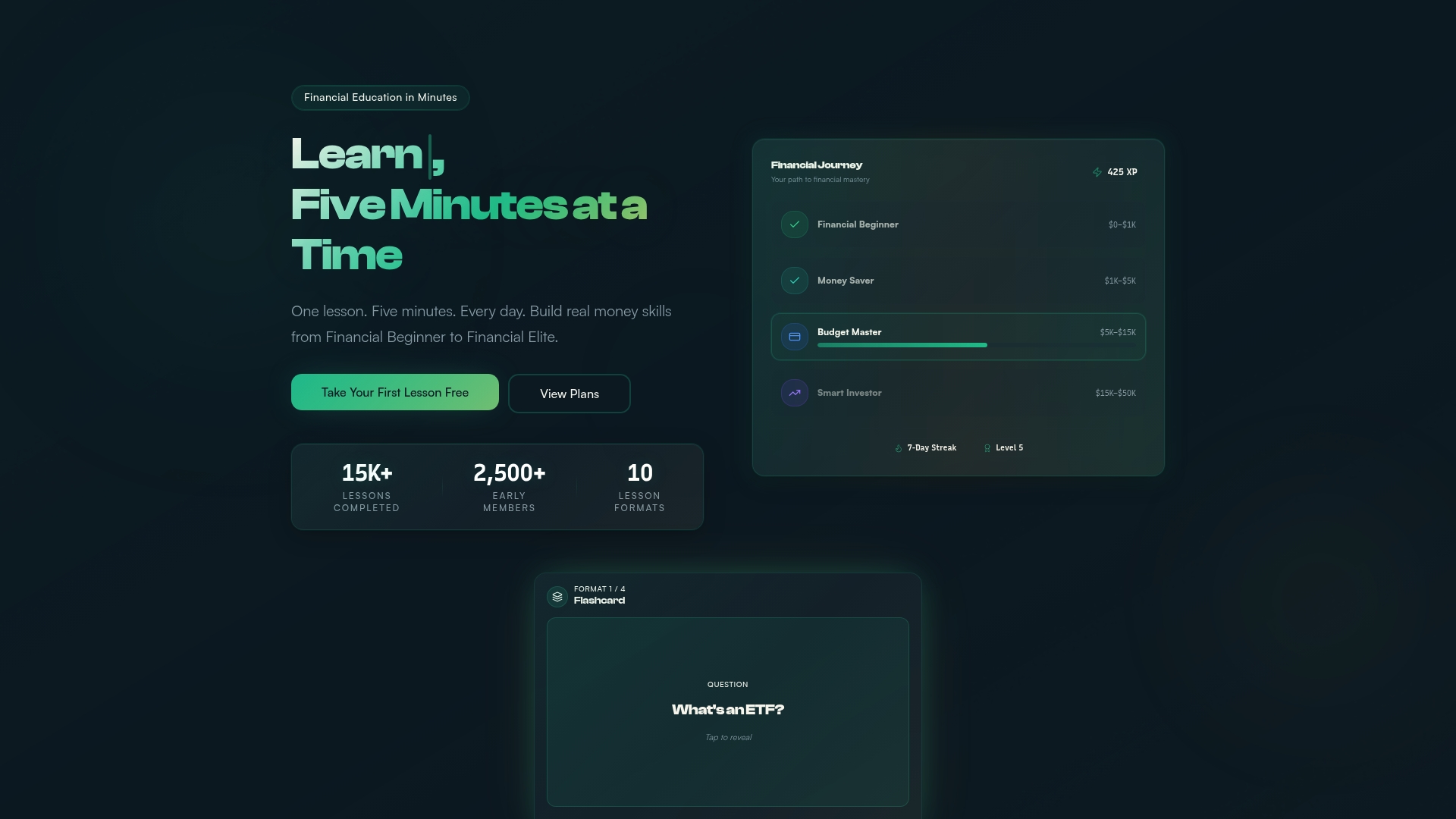
Parents love that Minutementor uses gamified progress tracking to keep kids motivated. Lessons are short enough to finish on a commute and clear enough for a middle schooler to follow without help. Whether your child is just opening their first savings account or ready to learn about loans, Minutementor's money lessons meet them where they are. Check out Minutementor's pricing to find the right plan for your family.
FAQ
What is a bank, explained simply for kids?
A bank is a safe place that stores your money, records your balance digitally, and lends funds to others so the economy keeps moving. It pays you interest as a reward for keeping your money there.
At what age should kids learn about banking?
Financial education should start at age 5 with simple concepts like needs vs. wants. By age 8, kids are ready to understand saving and interest, and by their teens they can handle checking accounts and debit cards.
Is a child's money safe in a bank?
Yes. The FDIC insures bank deposits up to $250,000 per depositor per bank, meaning your child's savings are protected even if the bank closes.
What type of bank account is best for a child?
A custodial savings account works best for younger children because a parent controls the account while the child learns. Teens benefit from joint checking accounts that give them more independence with parental oversight still in place.
How do I teach my child about interest?
Use a home experiment: give your child a small amount of money and add a fixed percentage each week it stays saved. Watching the balance grow makes the concept of interest concrete before any math is required.