A financial milestone for kids is a specific, age-appropriate money skill or concept that a child masters as part of building lifelong financial habits. These milestones are not rigid tests. The Consumer Financial Protection Bureau defines financial capability as a developmental process, with milestones serving as guideposts paired with hands-on activities and real conversations. Research from Cambridge University shows money habits form as early as age 7, which means the window for early impact is shorter than most parents realize. Frameworks like "Save, Spend, Give" and tools like Greenlight debit cards give you practical, proven ways to move your child through each stage with confidence.
What is a financial milestone for kids by age group?
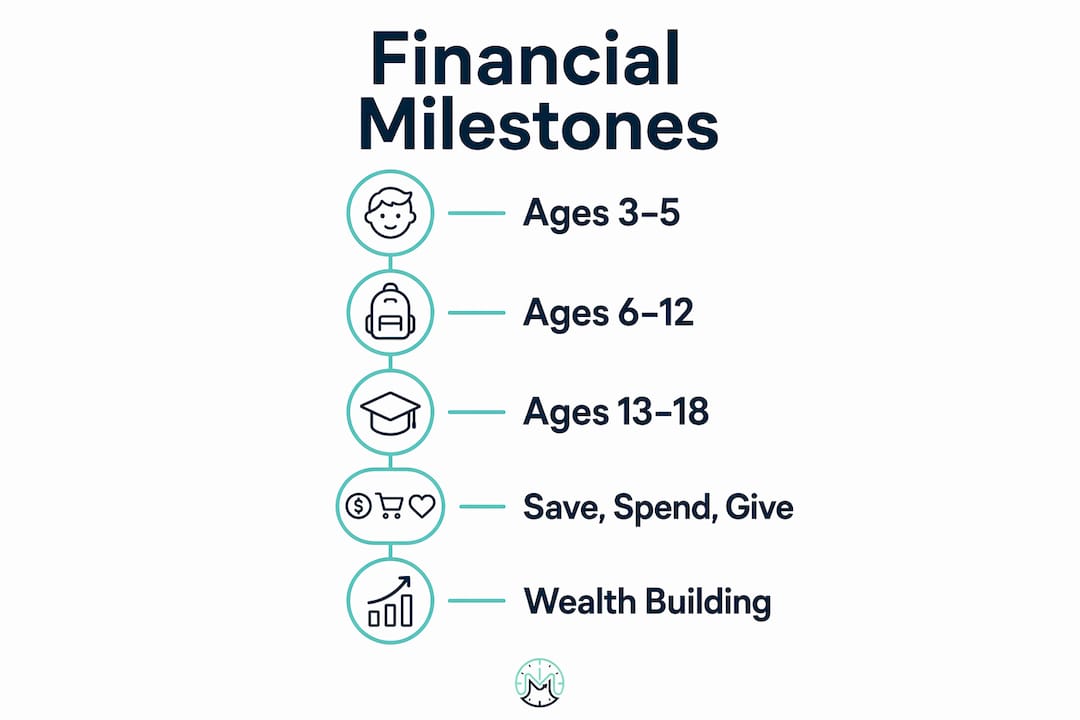
Financial milestones for children follow a "crawl, walk, run" progression that moves from coin recognition at age 3 to managing diversified portfolios at 18. Each stage builds on the last. Skipping stages does not accelerate learning. It creates gaps that show up later as poor money decisions.
Ages 3–5: recognizing money and delayed gratification
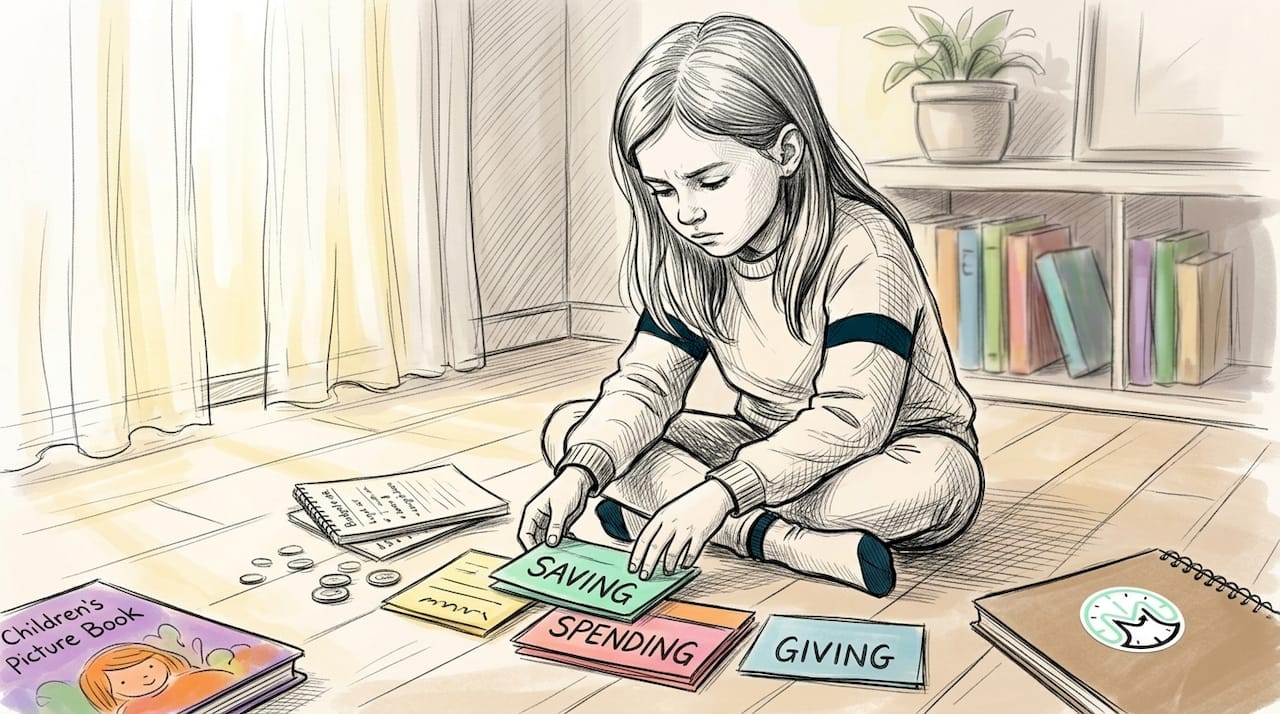
Children in this age group learn that money is real, limited, and exchangeable for things they want. The primary milestone is delayed gratification. A simple three-jar system labeled "Save," "Spend," and "Give" introduces the idea that money has categories. At this stage, the goal is not math. It is patience and awareness.
Ages 6–12: choice, trade-offs, and managed spending
This is where financial goals for children get concrete. Kids learn that every purchase is a trade-off. Spending $10 on a toy means not having $10 for something else next week. Managed debit cards like Greenlight and Copper work well here because they give kids real spending power with parental guardrails. The "Save, Spend, Give" model is the industry standard for this age group. It transforms abstract financial concepts into a tangible, repeatable system.
Ages 13–18: wealth building and real accounts
Teenagers are ready for wealth-building concepts. Custodial brokerage accounts and high-yield savings accounts make abstract ideas like compound interest real. FINRA recommends teaching the "Rule of 72" at this stage. Dividing 72 by an interest rate shows how many years it takes money to double. At 4% interest, money doubles in 18 years. That single concept, understood at 16, changes how a teenager thinks about saving.
| Age Group | Key Milestone | Recommended Tool | Developmental Focus |
|---|---|---|---|
| 3–5 years | Delayed gratification | Three-jar system | Patience and money awareness |
| 6–12 years | Trade-offs and choice | Greenlight or Copper debit card | Decision-making and budgeting |
| 13–18 years | Wealth building | Custodial brokerage or high-yield savings | Investing and long-term thinking |
Pro Tip: Start the three-jar system the same week your child receives their first allowance. The earlier the habit forms, the less you have to undo later.
How can parents teach financial milestones at home?
Teaching kids about savings does not require a finance degree. It requires consistency, visibility, and a willingness to let your child make small mistakes. The most effective methods are the ones that make money tangible and decisions feel real.
Clear jars instead of opaque piggy banks make savings progress visible to children aged 4–7. Physical visibility cements abstract savings concepts in ways that a hidden piggy bank simply cannot. When a child watches their jar fill up week by week, the reward feels earned and real.
Here are the core strategies that work at home:
- Use the "Save, Spend, Give" framework. Divide any money your child receives into three labeled containers. This builds the habit of allocating money before spending it, which is the foundation of every sound budget.
- Break big goals into weekly increments. A $20 goal split into $5 weekly increments over four weeks fits a child's time perception and keeps motivation high. SMART goals work for kids, not just adults.
- Model your own financial decisions out loud. Narrating trade-offs in real time, like choosing to make coffee at home instead of buying it, teaches budgeting better than any lecture. Children absorb what they observe.
- Let low-risk mistakes happen. If your child spends their "Save" jar on candy, resist the urge to replace the money. The experience of losing progress teaches more than any correction you could offer.
- Use financial conversations at home as a regular habit. A five-minute chat at the dinner table about a recent purchase or a savings goal keeps money top of mind without making it feel like a lesson.
Pro Tip: When your child asks "Can we buy that?" turn it into a question back: "Do you have enough in your Spend jar?" This one habit shifts the decision from you to them.
What tools support kids' financial learning in 2026?
Children's financial education has moved well beyond the piggy bank. The right tools give kids real experience with money while keeping parents informed and in control. Here is a practical breakdown of what works at each stage.
-
Greenlight debit card (ages 6–12). Greenlight lets parents set spending limits by category, approve purchases in real time, and assign chores tied to earnings. Kids see their balance update instantly, which makes the connection between earning and spending concrete.
-
Copper debit card (ages 13–18). Copper is built for teenagers and includes savings goals, spending insights, and financial education content inside the app. It gives teens more independence while keeping a parent dashboard active.
-
Custodial brokerage accounts (ages 13–18). Platforms like Fidelity Youth Account and Schwab allow parents to open investment accounts in a child's name. A teenager who buys one share of a company they recognize, like Apple or Nike, starts thinking like an investor.
-
High-yield savings accounts. Many online banks offer youth savings accounts with rates significantly above the national average. Pairing a high-yield account with the Rule of 72 makes compound interest a lived experience, not a textbook concept.
-
Educational money games. Games like Monopoly, The Game of Life, and digital apps like PiggyBot reinforce budgeting and trade-off concepts in a low-stakes environment. The educational games checklist from Minutementor is a strong starting point for parents looking to add play-based learning to their routine.
The key with all these tools is visibility without control. Your job is to monitor, ask questions, and guide. Resist the urge to override every decision your child makes.
What challenges do parents face teaching financial milestones?
Kids and money management gets messy in practice. Knowing the common obstacles ahead of time helps you stay calm and consistent when they show up.
-
Impulsivity is normal, not a failure. Young children are wired to want things now. When your child spends impulsively, treat it as a teaching moment, not a discipline issue. Ask what they would do differently next time.
-
Overcontrolling backfires. Parents who override every spending decision raise children who never develop financial judgment. Give your child real choices within safe limits. A $5 decision made poorly at age 8 is far cheaper than a $5,000 decision made poorly at 22.
-
Goal timelines must match age. A six-year-old saving for a $50 toy over six months will lose interest by week three. Keep goals short and wins frequent. As children grow, you can extend timelines and increase complexity.
-
Motivation dips are predictable. Every child hits a point where saving feels pointless. Celebrate small wins visibly. A sticker chart, a progress photo of the savings jar, or a simple "You did it" conversation keeps momentum alive.
-
Adjusting as kids grow takes intention. The approach that worked at age 8 will feel patronizing at 14. Smart money habits for high school students require more autonomy and more complex concepts. Plan to revisit your approach every year or two as your child's maturity changes.
The importance of financial milestones for children is not just about money. It is about building the confidence to make decisions, accept consequences, and plan ahead. Those skills transfer to every area of life.
Key takeaways
Teaching financial milestones by age is the most effective way to build lasting money skills in children, starting with delayed gratification at age 3 and progressing to real investing by age 18.
| Point | Details |
|---|---|
| Start with age-appropriate milestones | Match each milestone to your child's developmental stage, from jars at age 3 to brokerage accounts at 16. |
| Use the "Save, Spend, Give" framework | This three-category system is the industry standard for ages 6–12 and builds lifelong budgeting habits. |
| Make savings visible | Clear jars and real debit cards make abstract money concepts concrete for young children. |
| Let mistakes happen | Low-risk financial failures teach more than corrections, so resist replacing lost savings. |
| Use modern tools with guardrails | Greenlight, Copper, and custodial accounts give kids real experience while keeping parents informed. |
Build your child's financial future with Minutementor
You are already doing the hard work by showing up and learning how to guide your child through these milestones. Minutementor makes the next step easy. The platform delivers five-minute daily lessons built around real financial concepts, including budgeting, saving, and goal-setting, structured for learners at every stage. Its AI-powered coach adapts to your child's specific goals so every lesson feels relevant, not generic.

Parents who use Minutementor's learning platform report that their children build money confidence faster because the lessons are short, interactive, and tied to real progress. Check out Minutementor's pricing to find the plan that fits your family and start building a strong financial foundation today.
FAQ
What is a financial milestone for kids?
A financial milestone for kids is a specific, age-appropriate money skill a child masters as part of their financial development. Examples include recognizing coins at age 4, using a "Save, Spend, Give" jar system at age 8, and opening a savings account at age 13.
At what age should kids learn about money?
Children can begin learning basic money concepts as early as age 3, with research suggesting that core money habits form by age 7. Starting with simple tools like labeled jars and small allowances builds the foundation for more complex financial skills later.
What is the "save, spend, give" framework?
The "Save, Spend, Give" framework divides any money a child receives into three categories to build budgeting habits. It is the industry standard for ages 6–12 and transforms abstract financial concepts into a repeatable, tangible system.
How do i set financial goals for my kids?
Break goals into short, weekly increments that match your child's sense of time. A $20 goal split into $5 weekly amounts over four weeks keeps younger children focused and motivated without overwhelming them.
Should i let my child make financial mistakes?
Yes. Allowing low-risk mistakes and letting children experience the consequences is more educational than stepping in with corrections. The lesson sticks longer when the child feels the real outcome of their decision.