
Finding a personal finance education app that turns short lessons into real-world progress without long study commitments can feel like an uphill battle, especially for busy students and young learners. Many platforms restrict practical features like investing or rewards to higher-priced tiers and often lack clear pricing or sufficient classroom integration for educators. This overview compares microlearning, youth-focused, and social investing options so you can select the personal finance app that delivers the right mix of engagement, incentives, and price transparency for your goals.
Table of Contents
MinuteMentor
At a Glance
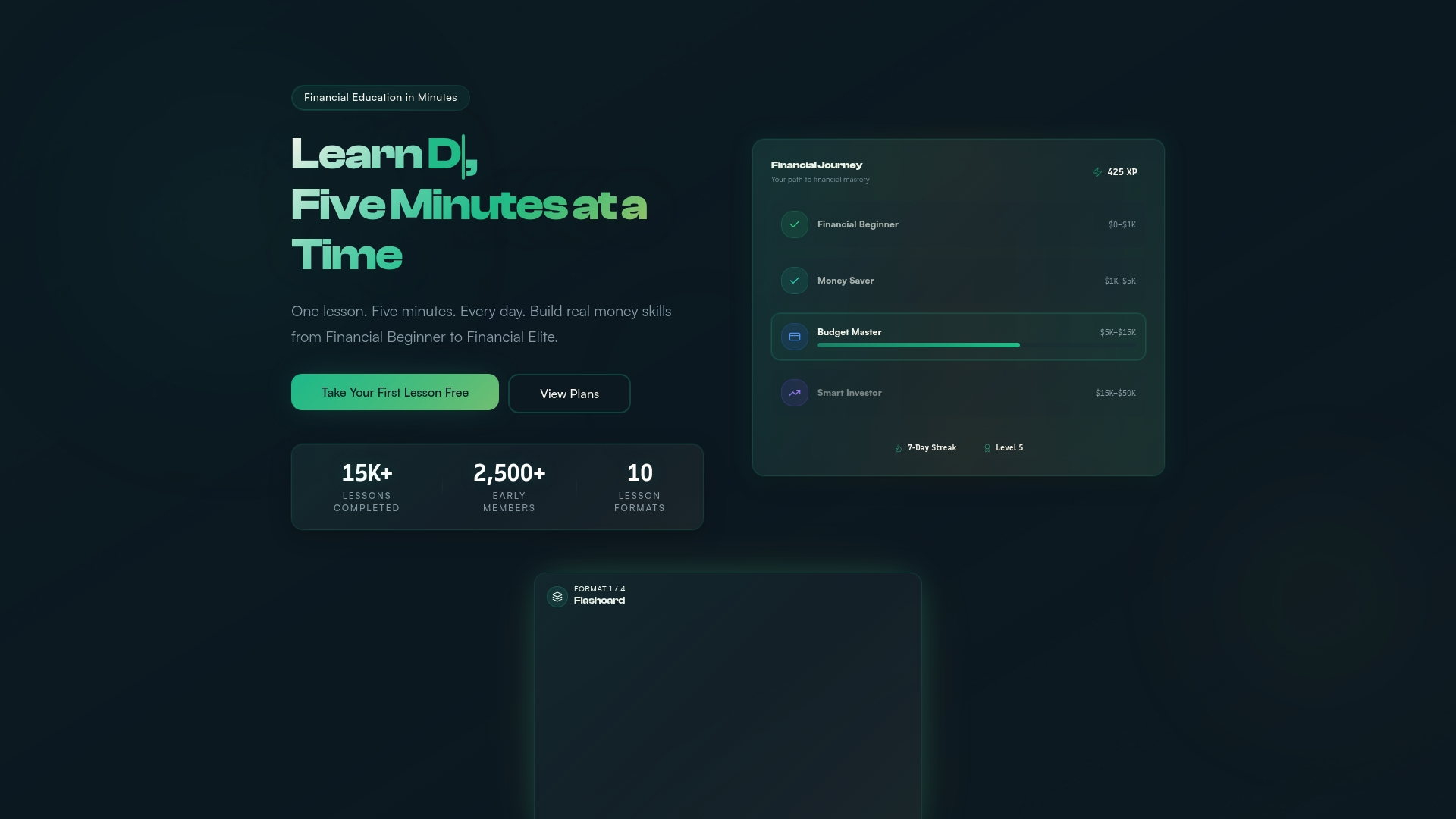
Five minute daily lessons aim to build financial confidence from beginner to elite levels without lengthy courses or long video sessions. The platform pairs that short format with an AI powered personal finance coach that adapts content to your goals and knowledge.
MinuteMentor's materials highlight interactive lessons, progress tracking, and gamified motivation to keep learners on a steady streak.
Core Features
- AI powered personalized learning paths that adapt to your goals, whether budgeting, investing, or debt management.
- Microlearning lessons delivered in five minute sessions so you can learn during a commute or study break.
- Progress and streak tracking with badges and leaderboards to reward consistency.
- Free basic lessons plus optional paid tiers for deeper content and extra tools.
- Practical tools like calculators and cheat sheets for immediate application.
Key Differentiator
The single feature that sets this apart is the way the learning path adapts as you progress. The system reshuffles lesson priorities based on mastery and stated goals so you spend time on gaps rather than repeating general material.
That adaptive path makes short lessons cumulative instead of fragmented. Over weeks the platform nudges you toward clear, practical milestones tied to real financial tasks.
Pros
- Accessible microlearning fits into busy schedules and lowers the barrier to forming a daily habit.
- Personalized guidance means you spend time on what matters for your situation rather than a one size fits all syllabus.
- Flexible subscription options let you start for free and upgrade to Pro or Elite as you want deeper content.
- The vendor advertises learner ratings around 4.8/5, which the company uses to highlight user satisfaction in its marketing.
- Practical focus on worksheets, calculators, and checklist style lessons helps you apply learning immediately.
Cons
- Lessons are intentionally short and therefore limited in depth; advanced users will need supplementary resources for deep dives.
Who It's For
Busy students, young professionals, and anyone who wants targeted financial skills without committing hours to a course. A good match if you need fast, practical lessons that slot into study breaks and commutes.
Unique Value Proposition
Five minute daily lessons change the habit equation. Instead of blocking long study sessions, you collect small wins every day and the AI powered coach stitches those wins into a tailored plan.
That combination turns irregular reading into measurable progress and reduces decision friction about what to study next. For learners who value time over breadth, this model speeds practical skill building.
Real World Use Case
A high school student uses a ten minute window twice a day to complete ETF basics and a calculator exercise, then applies the cheat sheet to set up a first brokerage account. A young professional uses daily debt management mini lessons to cut interest costs and track payoff milestones.
Pricing
Free tier with basic lessons. Pro is $7.99 per month for expanded content and tools. Elite is $14.99 per month for full access to advanced lessons, priority features, and enhanced progress analytics.
Website: https://minutementor.app
KidVestors
At a Glance
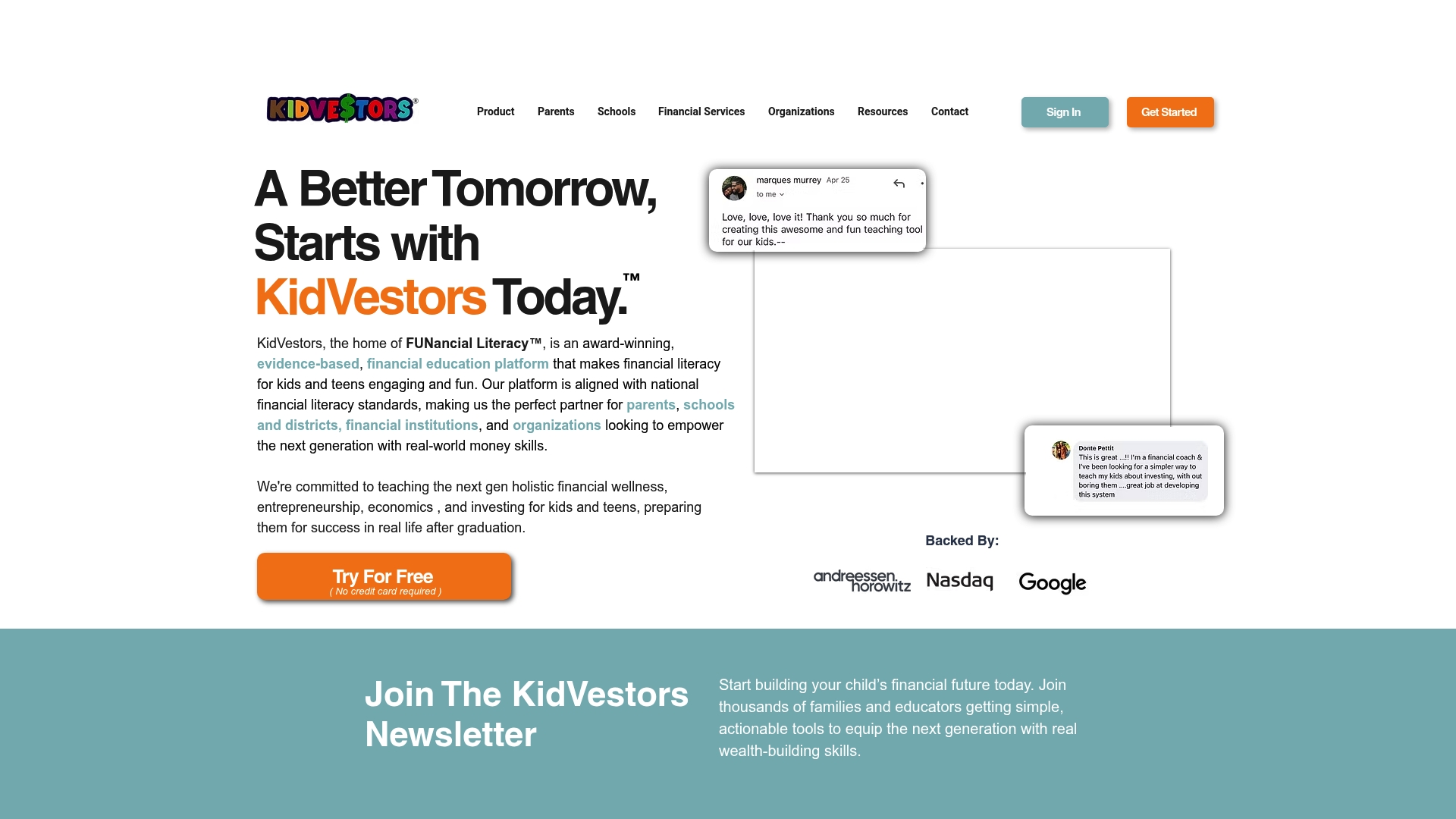
Students can earn real cash and fractional stock rewards for completing lessons and activities, a concrete incentive that ties learning to real-world outcomes.
The company describes its curriculum as evidence-based and aligned with national standards for elementary through high school learners, with separate tracks for parents and educators.
Core Features
- Gamified, interactive modules built for kids and teens with progress tracking and rewards.
- Standards-aligned content mapped to national financial literacy expectations and social emotional learning goals.
- Pre-made lesson plans and automated grading to speed implementation in classrooms and homeschools.
- Age-appropriate tracks for elementary, middle, and high school levels.
- Rewards in cash and stocks to incentivize engagement and teach investing basics.
Key Differentiator
KidVestors centers its curriculum on school-ready standards and ties those lessons to tangible rewards, which teachers can use to motivate students who respond to gamified incentives.
That focus on youth investing and classroom workflows sets it apart from adult-oriented personal finance communities. It serves schools and family learners rather than aiming at individual adult savers.
Pros
- Engaging content that resonates with younger learners through gameplay elements and short interactive lessons. Teachers report higher participation when lessons are gamified.
- Standards-aligned content reduces prep time for classroom use and maps directly to district learning objectives.
- Supports multiple stakeholder groups including parents, schools, and financial institutions, making it easy to plug into school programs or bank outreach efforts.
- Offers free personal finance tools and educator resources so districts can pilot modules without budgetary commitment.
- Positive testimonials from parents and financial professionals support the platform’s classroom utility and family adoption.
Cons
- The vendor reports a Trustpilot score of 3.2/5, and reviews are mixed, so experiences with support and refunds vary.
- Several users have complained about access problems when parental controls block YouTube content and lesson videos fail to play.
- Refund requests and customer support interactions have produced inconsistent results for some families according to user reports.
When It May Not Fit
If your district or family requires all video content hosted behind an LMS or on servers that avoid YouTube, this platform may cause friction because lesson videos rely on that service.
If you need broad third-party review data or an established, high aggregate satisfaction score before adopting a curriculum, the mixed review record above suggests you should pilot first.
Who It's For
Parents, classroom teachers, and school administrators who want a turn-key, standards-aligned financial literacy solution that rewards student progress. It also fits banks and nonprofits looking for youth engagement programs tied to measurable lesson plans.
Real World Use Case
A suburban school district adopts KidVestors for grades three through seven to meet state standards. Teachers use the pre-made lesson plans and automated grading to save prep time. Students earn small cash rewards tied to classroom activities which increases participation during unit assessments.
Website: https://kidvestors.co
Finabl
At a Glance
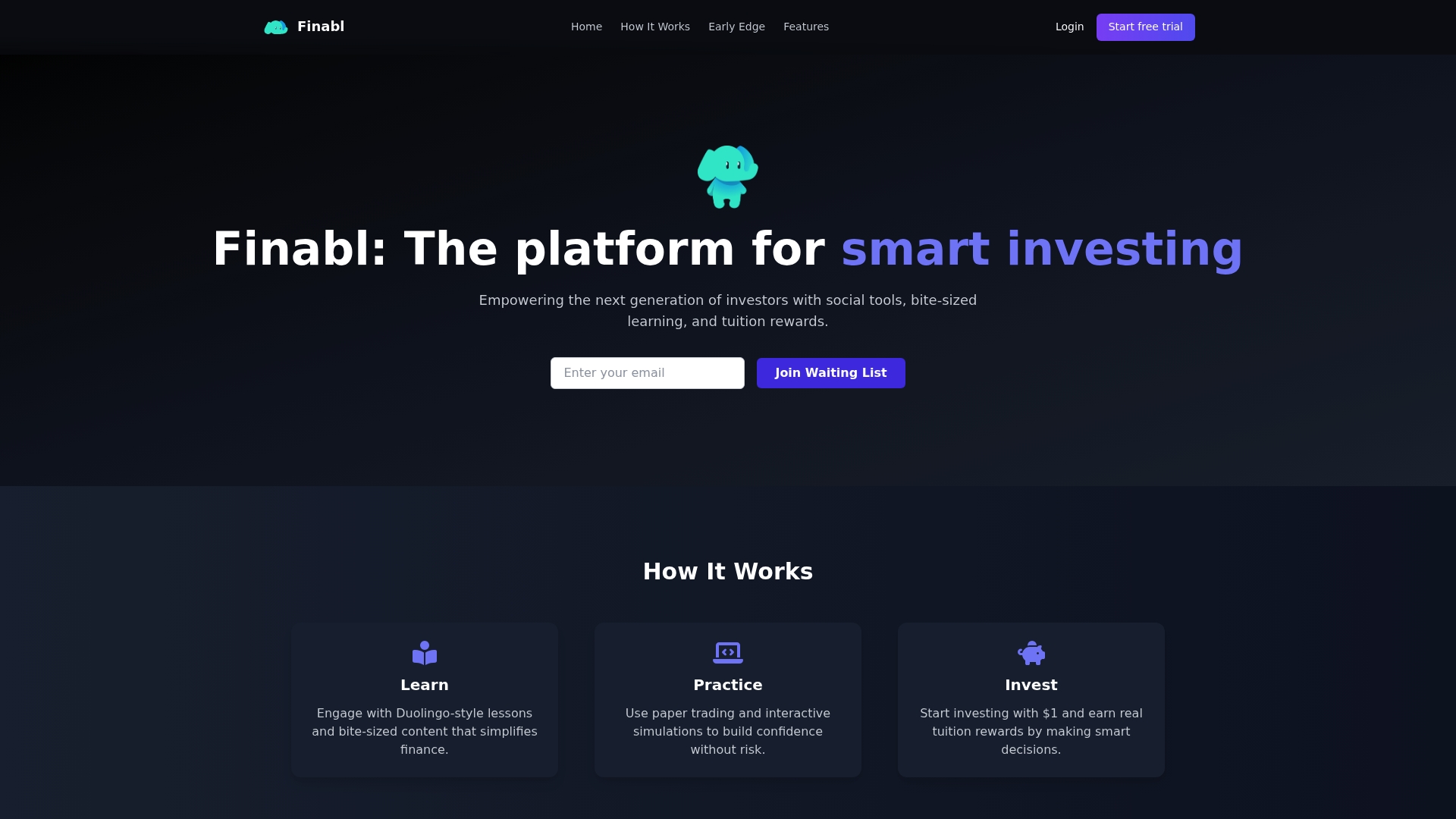
Users can begin investing with as little as $1, letting students and young beginners buy fractional shares without large capital. Finabl blends short lessons, social portfolio sharing, and tuition rewards so learning and small-scale investing happen in the same place.
Core Features
- Fractional investing that accepts very small deposits so a new investor can buy pieces of stocks for a dollar or two.
- Gamified lessons that present bite-sized finance modules and quizzes to build basic literacy while you practice.
- Tuition rewards that credit learning and engagement toward educational costs, a rare incentive in investing apps.
- Social portfolio sharing and real-time alerts driven by an AI advisor for conversational learning and peer examples.
Key Differentiator
Finabl pairs practice with payoff by tying micro-investing to tuition rewards and visible social feeds. That trio of social investing, small minimums, and study rewards positions Finabl differently from MinuteMentor, which focuses on five-minute AI coaching and structured daily lessons rather than real-money investing and tuition incentives.
Pros
- Combines education and practice so you learn by doing instead of reading alone. That practical loop shortens the time from concept to action.
- Low financial barrier. Starting at small dollar amounts removes the psychological hurdle most students face when first investing.
- Social features let peers compare portfolios and discuss trades, which helps accountability and keeps learning social rather than solitary.
- Tuition credits reward consistent learning, turning study streaks into a tangible benefit for students trying to offset costs.
- Mobile-friendly format suits on-the-go learners and users who prefer short, repeatable sessions.
Cons
- Several public pages return 404 errors which limits how much of the product can be inspected before signing up.
- No third-party reviews or audits are available to verify user satisfaction or platform performance.
- The marketing materials do not publish clear pricing, account fees, or custodial arrangements which complicates cost comparisons.
When It May Not Fit
If you need a regulated custodial environment with documented fee schedules for college savings or tax reporting you will want clearer disclosures than Finabl currently provides. Advanced investors also will find the feature set too basic for research and trading beyond fractional positions.
Who It's For
Young, tech-savvy beginners, students, and parents who want a gentle, social entry into investing. Ideal for someone who values learning incentives and small-dollar practice more than advanced order types or deep analytics.
Real World Use Case
A college sophomore uses Finabl to study a weekly lesson, invest two dollars into a diversified ETF, and earn small tuition credits after maintaining a study streak. The student watches portfolio alerts in the app and discusses allocation choices with classmates in the social feed.
Pricing
The vendor does not publish pricing in the available product data and the supplied pricing field is listed as not applicable. Because fees and custody details are not visible publicly you should contact Finabl directly before moving real funds.
Website: https://finabl.org
Comparative Analysis of Personal Finance Education Apps
The three personal finance education apps—MinuteMentor, KidVestors, and Finabl—each offer distinct advantages based on the target audience and learning preferences. Here, we explore their respective strengths, pinpointing considerations relevant to their use cases while identifying scenarios for each.
User Engagement Through Gamification
Both KidVestors and Finabl incorporate gamified elements to boost user engagement. KidVestors’ system incentivizes learning by tying lessons to tangible cash and stock rewards, a feature that resonates well with younger audiences and classroom settings. Conversely, Finabl’s social portfolio sharing fosters community learning and shared progress visibility, which appeals to tech-savvy beginners looking to learn cooperatively. In comparison, while MinuteMentor doesn’t feature similar gamified rewards, it excels in providing personalized feedback through its AI-driven guidance.
Practical Tools and Real-World Applications
Both MinuteMentor and Finabl focus on equipping users with tools. MinuteMentor distinguishes itself with specialized calculators and financial checklists that enable immediate application of learned principles, while Finabl integrates learning with live fractional investing starting as low as $1. This unique offering allows users to practice real investment scenarios during their learning journey. For users seeking standards-aligned, structured curriculum utility, KidVestors stands out with preconfigured lesson plans and classroom alignment resources.
Best Fit Scenarios
- For short, personalized financial lessons fitting into busy schedules, MinuteMentor is highly recommended.
- For educators seeking standards-aligned content with incentives for young learners, KidVestors offers a rewarding classroom solution.
- For beginners interested in immediately hands-on investing with minimal monetary commitment, Finabl bridges education and practice effectively.
Our Pick
MinuteMentor emerges as the overall recommendation for individuals prioritizing daily, personalized learning curated by AI to enhance financial literacy. While competing solutions present compelling features for specific user bases, MinuteMentor’s rapid, cumulative microlearning methodology is uniquely suited for busy professionals or students seeking consistent improvement with minimal time investment. For users specifically seeking gamified rewards or integrated investment platforms, exploring alternatives such as KidVestors or Finabl may better align with those preferences.
Personal Finance Education Apps Comparison
Discover which platforms offer the best features for users seeking targeted financial education tailored to their individual goals.
| Product | Key Differentiator | Best For | Pricing | Notable Limitation |
|---|---|---|---|---|
| MinuteMentor | Adaptive lesson paths based on goals | Busy individuals needing short lessons | Free, Pro $7.99/month, Elite $14.99/month | Short lessons may lack advanced depth |
| KidVestors | Rewards linked to lesson completion | Parents and educators | Not disclosed | Mixed reviews regarding support and technical issues |
| Finabl | Investing and tuition rewards for participation | Beginners in finance wanting hands-on practice | Not disclosed | Lacks clear pricing and verified reviews |
Looking Beyond Finabl.org Alternatives for Personalized Financial Learning
Feeling the need to build financial skills without complex setups or unclear costs is common when exploring alternatives to finabl.org. Many beginners and students want practical lessons tailored to their personal goals, not generic content or hard-to-navigate investing platforms. MinuteMentor tackles these challenges by offering focused five-minute daily lessons paired with an AI-powered coach that customizes your learning path on budgeting, investing, or debt management.
Discover how targeted microlearning and interactive tools can help you progress steadily. Visit MinuteMentor now to start building confidence with personalized financial education designed for busy learners. Try out the free tier and see how small consistent lessons turn into meaningful money management skills that fit your life.
Frequently Asked Questions
How does Minutementor's personalized learning compare to KidVestors?
Minutementor offers AI powered personalized learning paths that adapt to your specific goals like budgeting and investing. This system allows you to focus on your knowledge gaps rather than general material, making the learning process more targeted and efficient. Users learn practical skills based on their preferences at their own pace, so you can dive right into what matters most to you.
What is the difference between Minutementor and Finabl?
Finabl excels in micro-investing by allowing users to start investing with as little as $1, thus lowering financial barriers for beginners. In contrast, Minutementor focuses on shorter, structured five-minute lessons that build financial literacy without real money investment. If you prioritize a guided learning experience over actual investing, Minutementor is the better fit for your educational needs.
Which platform offers gamified motivation features?
Both Minutementor and KidVestors utilize gamified elements to keep users engaged in their financial learning. Minutementor employs badges and leaderboards for tracking progress, while KidVestors connects lesson completion with cash and stock rewards. If you appreciate a competitive edge in your learning, either platform can enhance your experience, but Minutementor's approach focuses specifically on skill mastery through consistent engagement.
Can I use Minutementor if I have limited time for learning?
Yes, Minutementor is designed for users with tight schedules, offering five-minute microlearning lessons that can easily fit into brief breaks. This format lowers the commitment barrier, allowing for steady skill building without long study sessions. For anyone looking to incorporate financial education into a busy lifestyle, this option allows for impactful learning in a manageable time frame.
How does Minutementor support practical application of financial skills?
Minutementor includes practical tools such as calculators and cheat sheets to help users apply their learning immediately. This hands-on approach ensures that skills are not just theoretical but are practiced in real-life scenarios, making the lessons more effective. Expect to engage with tools that directly benefit your financial decisions as you learn.