
The most common money mistakes teenagers make are overspending, skipping savings, misusing credit, and letting subscriptions drain their accounts without noticing. These aren't just small slip-ups. They're patterns that, left unchecked, follow you into adulthood and make every financial goal harder to reach. The good news? The teen years are actually the cheapest time to learn these lessons. Low stakes now means real power later. This article breaks down the biggest financial mistakes teenagers make and gives you a clear fix for each one.
1. Not budgeting or tracking your spending
Skipping a budget is the single most common teen spending error, and it quietly costs more than most teens realize. Without tracking, money disappears into small purchases, food runs, and random online buys. You feel like you have money, then suddenly you don't.

The problem isn't willpower. It's that spending what's available feels natural when there's no system in place. Teens who don't track spending have no way to know whether they're on track or burning through cash faster than they earn it.
Here's how to start without overcomplicating it:
- Write down every purchase for one week. You don't need an app yet. A notes app on your phone works fine.
- Sort spending into three buckets: needs (transport, food), wants (entertainment, clothes), and savings.
- Set a weekly spending limit for your "wants" bucket and stick to it.
- Try the 24-hour rule. Before any non-essential purchase over $20, wait 24 hours. If you still want it, buy it. If not, skip it.
- Use a simple app like Mint or a basic spreadsheet once you're ready to go digital. Complicated spreadsheets are unsustainable for most teens, so keep it simple.
Pro Tip: Set aside 20% to 30% of every paycheck or allowance the moment you receive it. This "pay yourself first" approach means savings happen automatically, before you get a chance to spend. Saving a portion first rewires your spending habits and builds savings muscle memory within about two months.
2. Letting subscription creep drain your money
Subscription creep is the slow, invisible leak in your finances. It happens when you sign up for services, forget about them, and keep paying month after month. The average 16 to 22-year-old has 6 to 9 active subscriptions, with about one-third of those going unused every month. That adds up to $240 to $600 wasted every year. That's real money you could be saving or spending on things you actually use.
Small recurring charges feel invisible. A $5.99 charge here, a $9.99 charge there. None of them feel like a big deal individually. But together, they're one of the largest financial leaks teens face today.
How to run a quarterly subscription audit:
- Open your bank or card statements and list every recurring charge.
- For each service, ask: Did I use this at least four times last month? If not, cancel it.
- Check for free trials that converted to paid plans without you noticing.
- Cancel anything you haven't used in 30 days. You can always resubscribe later.
- Set a calendar reminder every three months to repeat this process.
| Subscription type | Monthly cost | Annual cost if unused |
|---|---|---|
| Streaming service (e.g., Netflix) | $15.99 | $191.88 |
| Music app (e.g., Spotify) | $10.99 | $131.88 |
| Gaming or app subscription | $9.99 | $119.88 |
| Cloud storage or productivity tool | $2.99 | $35.88 |
| Total (4 unused services) | $39.96 | $479.52 |
Cutting just two or three unused subscriptions can free up $20 to $30 per month. Over a year, that's a solid emergency fund or a head start on a savings goal.
3. Misusing credit cards and misunderstanding debt
Credit cards are not free money. That sounds obvious, but the first credit card for many teens feels like extra spending power, especially when the limit is low and the purchases feel manageable. The trap is carrying a balance. Revolving a balance month to month triggers interest charges that grow fast, turning a $100 purchase into $130 or more over time.
Here's what responsible credit use actually looks like:
- Pay your full statement balance every month. Not the minimum. The full amount.
- Never charge more than you can pay off at the end of the billing cycle.
- Understand your credit score. It's a number (300 to 850) that lenders use to judge how trustworthy you are with money. Late payments and high balances hurt it.
- Avoid using credit for social spending. Buying concert tickets or meals to keep up with friends on credit is a fast path to debt.
- Learn before you swipe. Read the terms of any card before applying, including the annual percentage rate (APR), which is the interest rate you'll pay if you carry a balance.
Pro Tip: If you're new to credit, start with a secured credit card or a student card with a low limit. Use it for one small recurring expense like a streaming service, then pay it off automatically each month. This builds your credit score without the risk of overspending.
You can also explore financial conversations at home to get a better handle on how credit works before you apply for your first card.
4. Spending to keep up with friends
Social spending pressure causes teens to overspend beyond their means, often leading to regret and financial stress. This is one of the most psychologically loaded financial mistakes teenagers make. When your friends are buying new sneakers, eating out every weekend, or going to every event, saying no feels awkward. So you spend money you don't have to avoid feeling left out.
The fix starts with separating wants from needs, and building a mindset that values your future over a moment of social comfort.
- Name your want list. Write down things you want to buy. Revisit the list in 30 days. Research shows about 70% of non-essential items teens delay purchasing for 30 days are never bought. The urge fades.
- Script your "no." You don't owe anyone an explanation. "I'm saving for something" or "I'm not spending this week" are complete sentences.
- Suggest free or low-cost alternatives. Hanging out at someone's house, going to a park, or cooking together costs almost nothing.
- Track social spending separately. When you see how much you spend just to keep up, the number is usually a wake-up call.
- Remind yourself of your goal. Whether it's a car, a trip, or just a cushion in your account, having a clear target makes it easier to say no to impulse spending.
Pro Tip: Create a "fun money" category in your budget with a fixed weekly or monthly amount. Once it's gone, it's gone. This gives you freedom to spend socially without blowing your entire budget.
5. Not having an emergency fund
Most teens don't think they need an emergency fund. Then their phone screen cracks, their bike needs a repair, or they need bus fare for a job interview and have nothing set aside. Experts recommend an initial emergency fund goal of $200 to $500 to cover most small teen emergencies. That's a realistic target that most teens can hit within a few months of consistent saving.
A small emergency fund does more than cover costs. It reduces stress and removes the need to borrow from friends, family, or a credit card when something unexpected happens.
Here's how to build yours:
- Start with a $200 target. That's about $17 per month over a year, or $50 per month for four months.
- Open a separate savings account so the money isn't mixed with your spending cash. Out of sight, out of temptation.
- Save a set percentage first. Experts recommend saving 20% to 30% of every paycheck before spending anything else.
- Define what counts as an emergency. Phone repairs, unexpected transport costs, and medical co-pays qualify. New clothes and concert tickets do not.
- Rebuild immediately after use. If you dip into the fund, treat replenishing it as your top financial priority.
Pro Tip: Label your emergency savings account something specific like "Emergency Only" or "Break Glass." The label creates a mental barrier that makes you think twice before spending it on something that isn't a real emergency.
Teens who build this habit early are far less likely to rely on credit cards during tough moments. You can read more about automating savings as a young adult to see how this habit scales as your income grows.
6. Falling for "pay to earn" scams
One of the most damaging financial mistakes teenagers make is paying upfront to access a supposed earning opportunity. These scams target teens specifically because they're eager to make money and less experienced at spotting red flags. The pitch usually involves urgency: "Limited spots," "Act now," or "Invest $50 to earn $500." Good earning apps and services for teens are always free to start. If someone asks you to pay before you earn, walk away.
Legitimate platforms like TaskRabbit, Fiverr, and local job boards don't charge you to sign up or apply. Any platform that requires an upfront fee to unlock work is almost certainly a scam. Protect your money by applying this one rule: if it costs money to make money, it's not a real opportunity.
7. Skipping financial education entirely
Teens who skip financial education don't just miss information. They miss the habit formation that makes money management automatic. Lack of saving muscle memory in teens creates patterns that are genuinely hard to fix once major financial obligations like rent, student loans, and car payments arrive. The earlier you build these habits, the less effort they require later.
Financial literacy isn't taught well in most schools. That means you have to seek it out. Reading articles like this one is a start. Using interactive tools, playing money skills games, and following structured learning paths builds the kind of knowledge that sticks. Teenage financial responsibility isn't about being perfect with money. It's about building enough awareness to make better decisions more often.
Key takeaways
Avoiding the most common money mistakes teenagers make comes down to three core habits: track your spending, save before you spend, and never carry a credit card balance.
| Point | Details |
|---|---|
| Budget from day one | Track every purchase and set a weekly spending limit to stay in control. |
| Audit subscriptions quarterly | Cancel any service you haven't used four or more times in the past month. |
| Save 20% to 30% first | Set aside a percentage of every paycheck before spending anything else. |
| Build a $200 to $500 emergency fund | Cover small unexpected costs without borrowing or using credit. |
| Pay credit balances in full | Never carry a balance month to month. Interest charges grow fast and damage your credit score. |
Build money skills faster with Minutementor
Knowing the mistakes is step one. Building the habits to avoid them is where real progress happens. Minutementor is built for exactly this. Five-minute daily lessons cover budgeting, saving, credit basics, and more, all tailored to your specific goals through an AI-powered personal finance coach. You don't need hours of study or a finance degree. You just need a few minutes a day and a plan that fits your life.
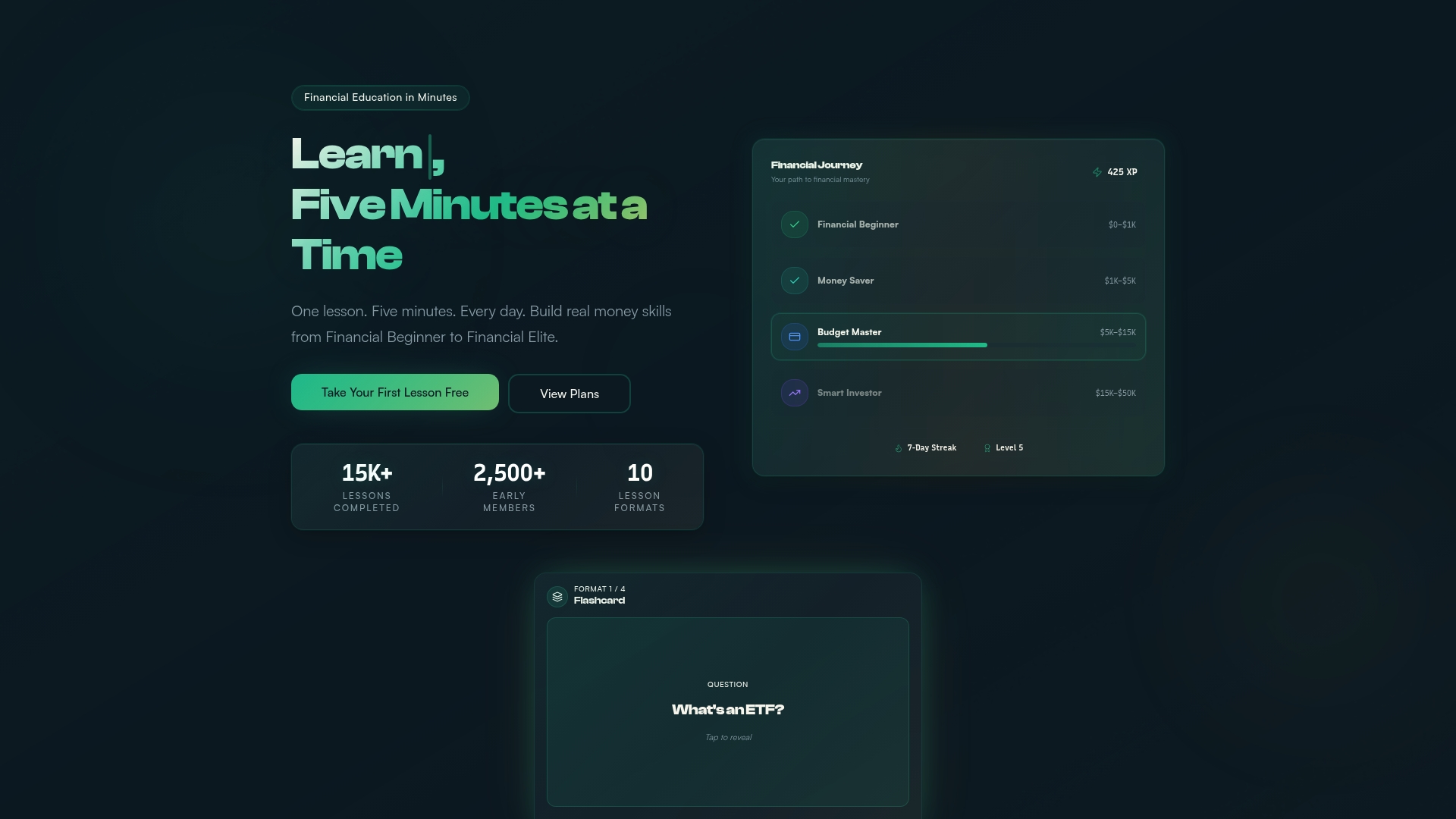
Teens and young adults using Minutementor have saved thousands by applying the same principles covered in this article, one short lesson at a time. Whether you're starting from zero or looking to level up your money skills, start learning today and see how fast five minutes a day adds up. Check out Minutementor's pricing to find a plan that works for your budget.
FAQ
What are the most common money mistakes teens make?
The most common financial mistakes teenagers make include not budgeting, ignoring subscription costs, misusing credit cards, spending to keep up with friends, and skipping emergency savings. Each of these drains money and makes adult financial goals harder to reach.
How much should a teenager save from each paycheck?
Experts recommend teens save 20% to 30% of every paycheck immediately upon receipt, before spending on anything else. Some teens with low expenses can save up to 50%, which accelerates progress toward goals significantly faster.
Why do teens struggle with money management?
Teens struggle with money management primarily because saving habits aren't taught early enough, leaving them without the muscle memory needed to handle financial obligations. Social pressure, impulse buying, and a lack of financial education compound the problem.
How do I stop impulse buying as a teen?
Use the 24-hour rule: wait 24 hours before buying any non-essential item over $20. Research shows about 70% of non-essential purchases teens delay for 30 days are never made, which means the urge to buy usually fades on its own.
How much should a teen's emergency fund be?
A starting emergency fund goal of $200 to $500 covers most small unexpected costs teens face, from phone repairs to transport emergencies. Keep this fund in a separate account and treat it as untouchable except for genuine emergencies.