Good money habits are defined as consistent routines around budgeting, saving, spending, and giving that, when practiced before adulthood, directly predict long-term financial stability. The formal term for this skill set is personal financial management, and the earlier you build it, the stronger your financial foundation becomes. Research from the CFPB's Money as You Grow program confirms that age-appropriate, repeated practice is what turns financial knowledge into lasting behavior. If you want to build money habits before adulthood, you do not need a high income or a finance class. You need the right framework, the right tools, and a routine you actually stick to.
What are the essential money habits teens and young adults should build?
The six habits below form the core of financial literacy for teens. They are not complicated. They are just rarely taught in a consistent, practical way.
- Create a budget and review it regularly. A budget is not a restriction. It is a map. Write down every dollar you receive and every dollar you plan to spend. Review it weekly so you catch problems before they grow.
- Save first, spend second. The "pay yourself first" principle means moving money into savings the moment you receive it, before any spending happens. The Conversation highlights this as a key teen-to-adult habit because it removes the need for willpower every single time.
- Make deliberate spending choices. Every purchase is a trade-off. Buying one thing means not buying something else. Practicing this awareness with small amounts of money now prepares you for bigger decisions later.
- Give or donate regularly. Allocating even a small amount to sharing builds financial generosity as a habit, not an afterthought. It also reinforces that money is a tool, not just a reward.
- Understand credit basics before you need them. Knowing how interest works and what a credit score measures before you open your first card prevents the most common and costly early adult mistakes. The Council for Economic Education reports that 39 states now mandate high school personal finance courses. That shift exists because waiting until college is too late.
- Reflect on your money weekly. A five-minute weekly check-in, where you compare what you planned to spend versus what you actually spent, builds self-awareness faster than any lecture.
Pro Tip: Set a recurring phone reminder every Sunday for a two-minute money check-in. Consistency beats intensity every time.
These habits are the foundation of smart money habits that high school students can start building right now, with whatever money they have.

How can the Spend, Share, Save framework help you manage money better?
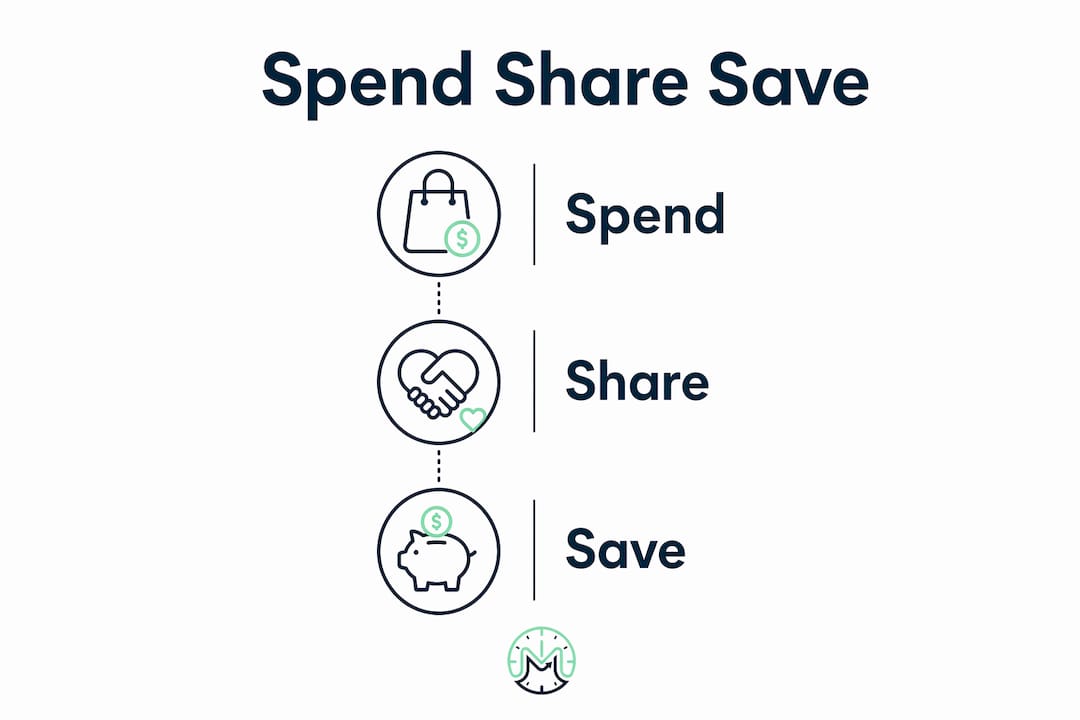
The Spend, Share, Save framework is the most practical entry point for teaching kids about money because it forces real decisions with real trade-offs. HealthyChildren.org recommends structuring all money around these three categories to build both discipline and generosity from an early age.
Here is what each category actually means in practice:
- Spend: This is money for planned, intentional purchases. The key word is intentional. You decide in advance what you will buy, rather than spending whatever is left over. If you earn $50 from a weekend job, you might allocate $30 to spending. That $30 covers your choices, and when it is gone, it is gone.
- Share: This is a fixed percentage set aside for giving. It could be a local food bank, a cause you care about, or a friend who needs help. Even $2 out of every $20 builds the habit. The amount matters less than the consistency.
- Save: This is money that does not get touched. It builds toward a goal, an emergency fund, or both. Treating savings as non-negotiable, not as whatever is left after spending, is the single biggest mental shift young people need to make.
The power of this framework is that it makes trade-offs visible. When you only have $50 and you want to spend $40, you immediately see that your Save and Share categories suffer. That tension is the lesson. HealthyChildren.org specifically notes that letting kids manage spending within limits helps them learn choices and consequences early, in a low-stakes environment.
Pro Tip: Use three separate labeled envelopes or jars when you first start. Physical separation makes the categories real and prevents mental accounting tricks.
A common starting split is 70% Spend, 10% Share, and 20% Save. Adjust based on your goals, but keep all three categories active every time money comes in.
What tools and activities can effectively build money habits before adulthood?
The right tools make practice easier and more consistent. The wrong tools, or no tools at all, make good intentions fade fast. Here is a comparison of the most practical options for teens and young adults:
| Tool | Best for | How to use it |
|---|---|---|
| Three-jar or envelope system | Beginners, ages 10–15 | Physically split cash into Spend, Share, Save on receipt |
| Teen checking account | Ages 13 and up | Practice real transactions, track a bank statement monthly |
| Budgeting apps | Ages 15 and up | Log every transaction, set category limits, review weekly |
| Money board games | All ages | Practice decision-making in a low-stakes, fun environment |
| Budgeting simulations | Middle and high school | Apply skills to realistic scenarios with real consequences |
The CFPB's youth financial education resources provide evidence-based activities and milestone trackers for every developmental stage from kindergarten through 12th grade. These are free and built around what actually works at each age.
For hands-on practice, budgeting simulations outperform passive learning by a wide margin. A 2026 Frontiers randomized controlled trial found that project-based learning significantly improved middle schoolers' budgeting comprehension compared to lecture-based methods. Students who completed budgeting simulations showed stronger real-world application of financial skills after just a short intervention. That result matters because it confirms that doing beats listening every time.
Money games are another underrated tool. Games like Monopoly, The Game of Life, and Cashflow 101 force players to make financial decisions repeatedly, which is exactly the kind of practice that builds intuition. For a structured list of options, the money games educational checklist from Minutementor covers games and interactive tools that build practical skills fast.
Reading also plays a role. Books like The Total Money Makeover by Dave Ramsey or I Will Teach You to Be Rich by Ramit Sethi introduce core concepts in an engaging, story-driven way. The role of books in money education is often overlooked, but reading about real financial decisions builds both knowledge and motivation.
The key principle across all tools is authentic, repeated practice. One lesson does not build a habit. Twenty repetitions do.
How to create a consistent routine to make money habits stick
A routine turns a good intention into an automatic behavior. The CFPB recommends operationalizing money habits as repeatable routines tied to income receipt and periodic review, rather than waiting until you feel motivated. Motivation fades. Routines do not.
Here is a simple weekly and monthly structure that works for teens and young adults:
- On the day you receive money: Split it immediately into your Spend, Share, and Save categories. Do not wait. The split happens first, before any purchase decisions.
- Every Sunday (5 minutes): Review what you spent during the week. Compare it to your plan. Note one thing you did well and one thing to adjust.
- First day of each month: Set your budget for the coming month. Review last month's totals. Adjust your category percentages if your goals have changed.
- Every three months: Check your savings progress toward a specific goal. Seeing real progress, even $50 saved toward a $200 goal, reinforces the habit powerfully.
The "pay yourself first" principle fits directly into step one. Automated savings remove the need to make a decision every time money arrives. If your bank allows automatic transfers, set one up to move your savings percentage the same day your paycheck or allowance lands.
Mistakes are part of the process. HealthyChildren.org recommends allowing manageable mistakes during adolescence so teens learn trade-offs before facing high-stakes credit decisions. Spending your entire Spend allocation in one day and having nothing left for the rest of the week is a lesson that sticks. It is far better to learn that at 16 with $30 than at 22 with a credit card.
Parents and mentors also make a real difference. Regular money conversations at home reinforce habits and normalize financial planning as a life skill. The role of financial conversations at home is one of the strongest predictors of teen financial confidence.
Pro Tip: Pair your Sunday money check-in with something you already do, like charging your phone for the night. Habit stacking makes new routines stick faster.
Key takeaways
Building money habits before adulthood requires consistent, age-appropriate practice across budgeting, saving, spending, and giving, starting as early as possible.
| Point | Details |
|---|---|
| Start with a framework | The Spend, Share, Save system gives every dollar a job and makes trade-offs visible. |
| Save first, always | The "pay yourself first" rule removes willpower from the equation and builds saving as a default. |
| Practice beats theory | Budgeting simulations and money games build real skills faster than lectures or reading alone. |
| Build a weekly routine | A five-minute Sunday check-in and same-day income splits turn intentions into automatic habits. |
| Mistakes are the lesson | Small, manageable money errors during teen years build the financial discipline needed for adult decisions. |
How Minutementor helps you level up your money skills
You have the framework. Now you need a place to practice it daily without it feeling like homework.
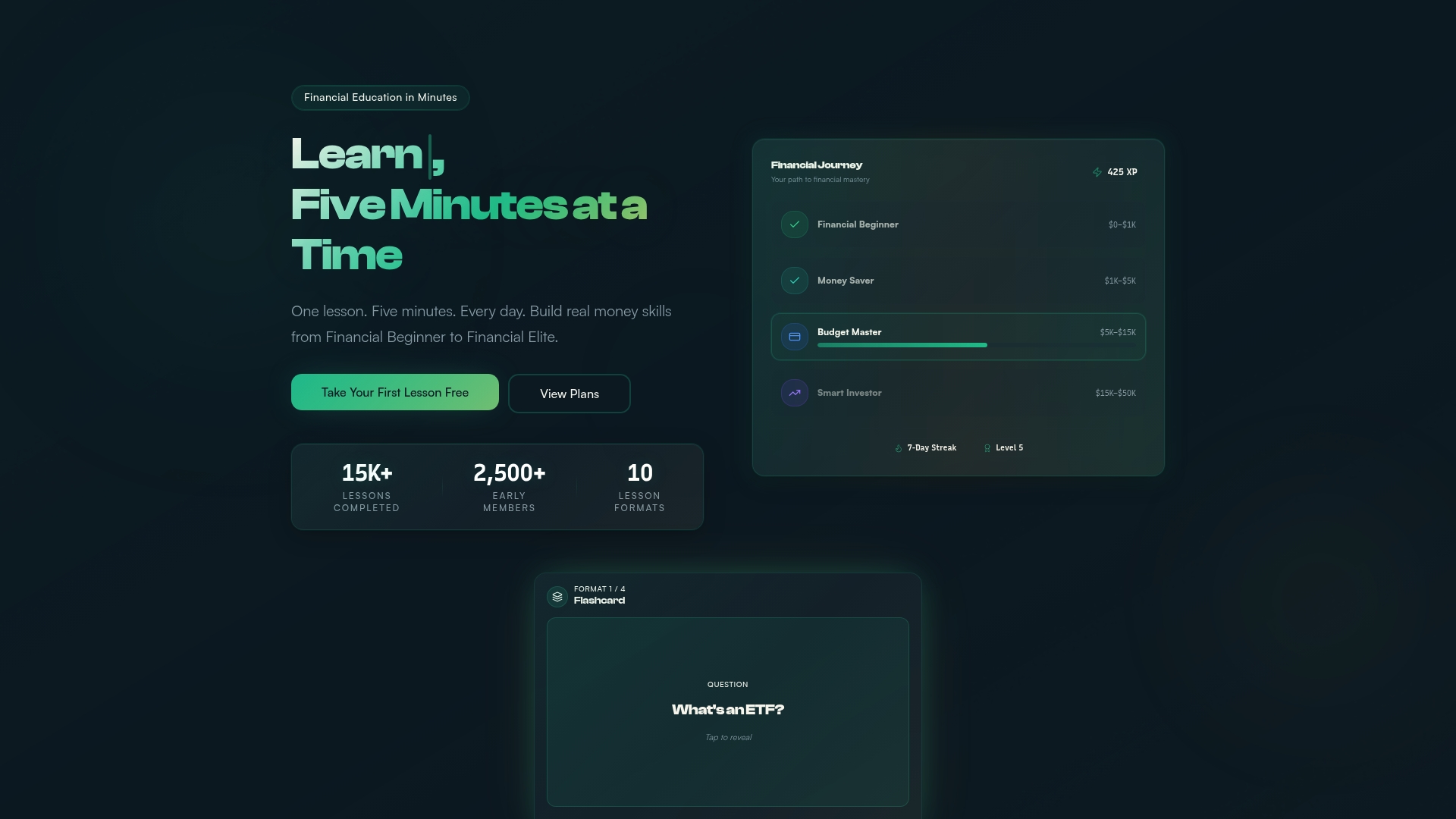
Minutementor delivers five-minute daily lessons built specifically for students and young adults who want to build real money management skills fast. The AI-powered personal finance coach tailors your learning path to your actual goals, whether that is mastering budgeting, building an emergency fund, or understanding credit before you need it. You can finish a lesson on your commute, between classes, or before bed. Progress tracking and gamified milestones keep you motivated as your skills grow. Check out Minutementor's pricing options and start your first five-minute lesson today. Financial confidence is a skill. You can build it one day at a time.
FAQ
What does it mean to build money habits before adulthood?
Building money habits before adulthood means practicing consistent financial behaviors like budgeting, saving, and spending intentionally during your teen years. These repeated behaviors become automatic by the time you face adult financial decisions.
What is the best first money habit for a teenager?
The "pay yourself first" habit is the most impactful starting point. Moving even 10% of every dollar you receive directly into savings, before spending anything, builds a default saving behavior that requires no willpower over time.
How does the Spend, Share, Save framework work?
The Spend, Share, Save framework divides every dollar you receive into three categories: money for planned purchases, money for giving, and money for savings goals. HealthyChildren.org recommends this structure because it makes financial trade-offs visible and teaches decision-making with real consequences.
What tools help teens practice money management skills?
Teen checking accounts, budgeting apps, three-jar systems, and budgeting simulations are the most effective tools. A 2026 Frontiers study found that project-based budgeting exercises improve financial skill application significantly more than passive instruction.
How many states require personal finance courses in high school?
The Council for Economic Education's 2026 survey reports that 39 states now mandate high school personal finance courses. Earlier mandated education shifts learning to the right time, before costly mistakes like credit card debt occur.